JEAN JONES (1927-2012)
A SPECIAL SHOWCASE
from the Artist’s Estate
for the BRITISH ART FAIR 2026
Saatchi Gallery, London, 24th – 27th September
ONLINE EVENT
We will be hosting an online panel discussion about Jean Jones
on Monday 14th September. Further details to follow.
Jean Jones was born Jean Verity Johnson in London in 1927 to Ella and Samuel Robinson. Her parents were both deeply affected by the First World War. Her father, in particular, suffered from PTSD and continued to struggle into the 1930s when he was given sick leave to recover in Devon. This would mark the beginning of Jean’s lifelong love of Dartmoor and the Devonshire countryside.
Jones entered Saint Martin’s School of Art in 1945, where she was taught by Ruskin Spear. After just one year, however, and encouraged by her father, she put painting aside to study English at Cambridge. In 1949, she met John Jones, a fellow of Merton College, Oxford, the couple becoming engaged after just three days. Soon after Jean’s graduation, she moved to Oxford.
There, Jones embraced the role of the Oxford wife, quickly becoming part of the city’s literary and intellectual circles. She was an excellent cook, and she and John hosted dinner parties twice a week, bringing together a remarkable array of Oxford intellectuals and writers. Their circle included William Golding, J. R. R. Tolkien, Iris Murdoch and her husband, John Bayley, among many others.
In 1958, they bought Yellends, a small house on the edge of Dartmoor where Jean was to paint many pictures. At this house, they spent holidays and John’s sabbaticals. It was to become a haven for them both, but in particular provided an outlet for Jean, who was finding Oxford increasingly difficult. Their group there was intensely intellectual, competitive (Romantically and otherwise) and Jean was also always defined in relation to John’s position as Professor of Poetry, which no doubt hampered her own attempts to establish herself as a writer.
In 1962, Jones read a Sunday Times supplement featuring the letters of Vincent van Gogh, which moved her so profoundly that she decided to take up art again. Over the following years, she revised and practised tirelessly, educating herself through drawing and reading widely in art history and critical theory. Alongside her self-education, she also took classes at the Ruskin School of Art under Percy Horton and at Oxford Polytechnic under Benedict Rubbra. Both teachers were deeply influenced by Post-Impressionist ideas, particularly the belief that artists must devote themselves fully to drawing directly from nature, a belief Jean was to adopt herself.
Many of Jones’ early works successes were rooted in her connections to the literary world. In 1971, she painted a portrait of John for his novel The Same God, while her portrait of William Golding was selected for the Royal Academy’s Summer Exhibition. She was also featured in the Financial Times for her portrait of her friend, the poet William Heath-Stubbs to mark his 70th birthday.
Throughout the 1970s Jones continued to exhibit and sell her work in Oxford while also gaining recognition in London. Her work appeared in group exhibitions at the Mall Galleries in 1976 and the New Grafton Gallery in 1979. Most notably, in 1980 she was the subject of a solo exhibition at the Ashmolean Museum, Oxford.
Jones’ work is inextricably linked to her struggles with mental illness. Throughout her life, she experienced manic episodes, periods of deep depression, paranoia, and anxiety. These difficulties intensified during the 1960s and 1970s, compounded in part by limited medical understanding of her condition and ineffective treatment. Her mental health struggles severely disrupted the development of her artistic career, and she was twice sectioned: first in 1983, for three months, and again in 1995, for six months.
Although there is an ever-present temptation to view an artist’s work as a positive by-product of their mental health, in Jones’ case, she strongly believed that her illness was, in fact, a barrier to artistic production. Her symptoms, which at times included loss of sight, prevented her from doing the thing she loved most: painting. Her extensive diaries do not suggest that she understood her mental health as a source of artistic inspiration; rather, they reveal her frustration at the ways in which it prevented her from producing her work. She was critical of the tendency to romanticise the idea of the ‘mad artist’.
THE EXHIBITION
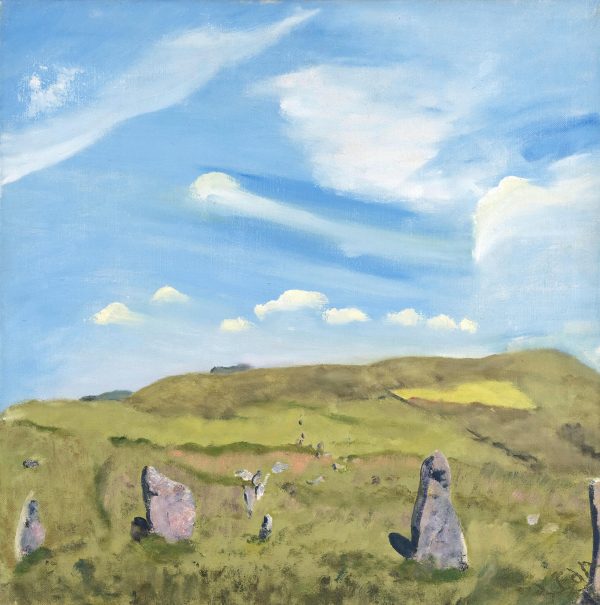
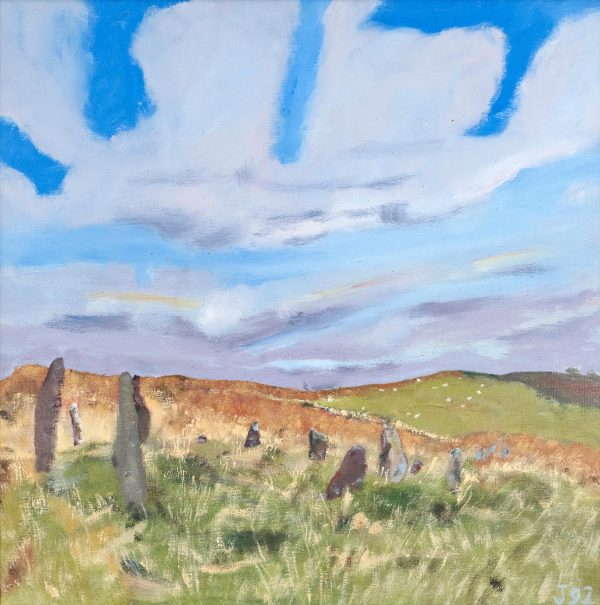
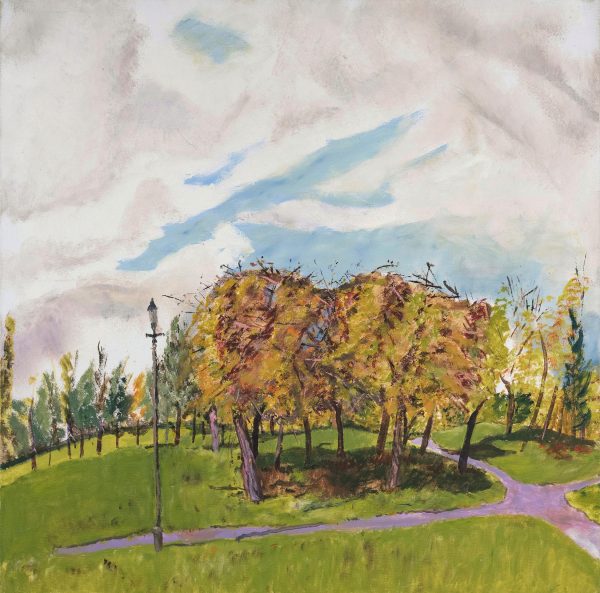
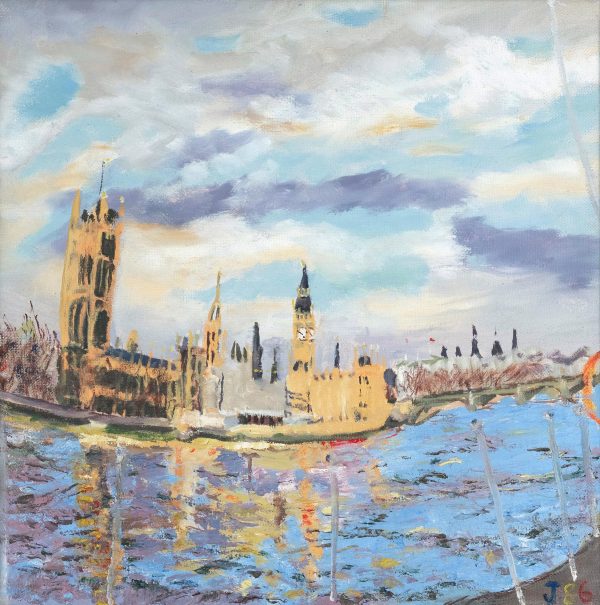
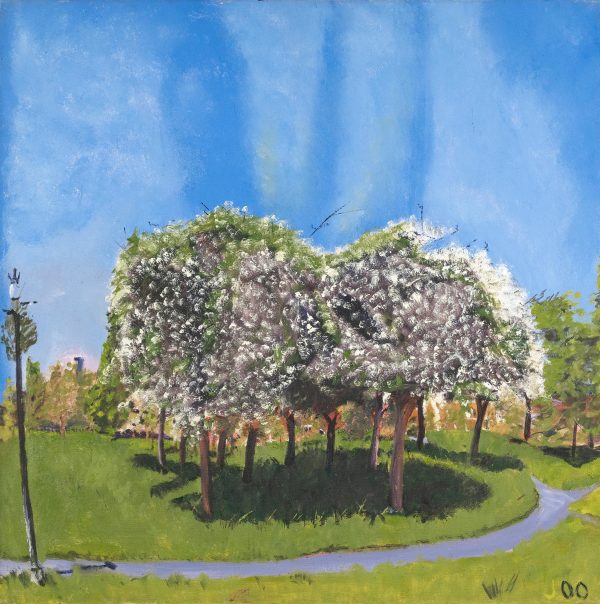
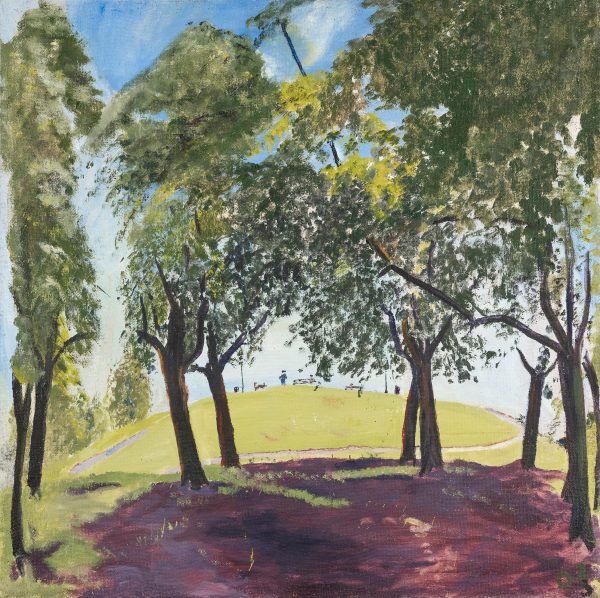
This small focus of paintings, created between the 1970s and early 2000s, is a collaboration with the Jean Jones Estate and is intended to introduce her work to a wider audience. The works were produced during a period when Jones’ mental health was rapidly deteriorating. Despite this, they should be understood as products of her at her best: moments in which, amid her struggles, she was able to find peace through painting. Much of this is to do with location. Jones had an extraordinarily powerful connection to ‘place’, in particular Dartmoor, which provided respite, and Primrose Hill in London, where she and John moved after his retirement.
As a painter Jones was drawn to the idea that the artist has an ability to capture something truthful from the world around them. She had a great natural ability in painting en plein air which allowed her to pursue this by returning to the same subjects again and again, combining a directness of representation with a powerful honesty of expression.
For more information on Jean Jones, we recommend the Jean Jones Estate website – CLICK HERE – and Michael Kurtz’s book, Jean Jones: and the Love of Painting (Halstar, 2025).