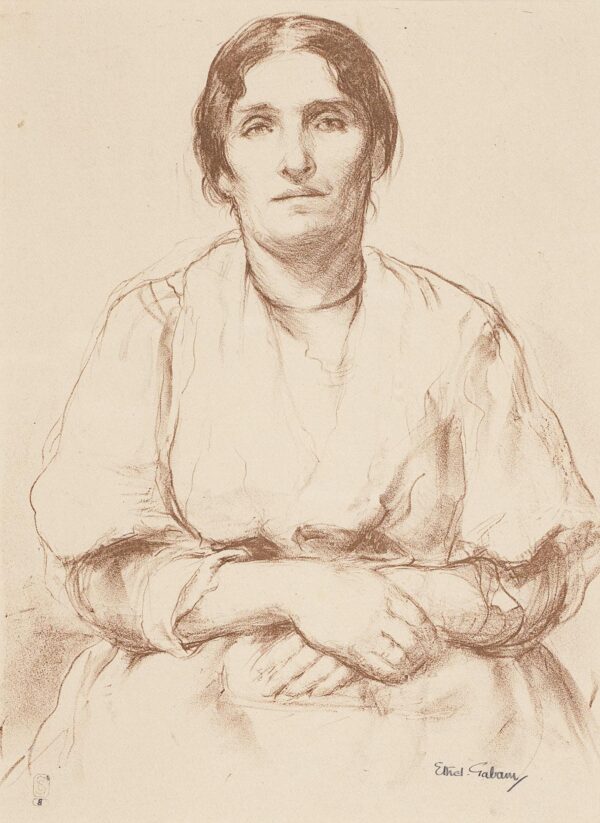
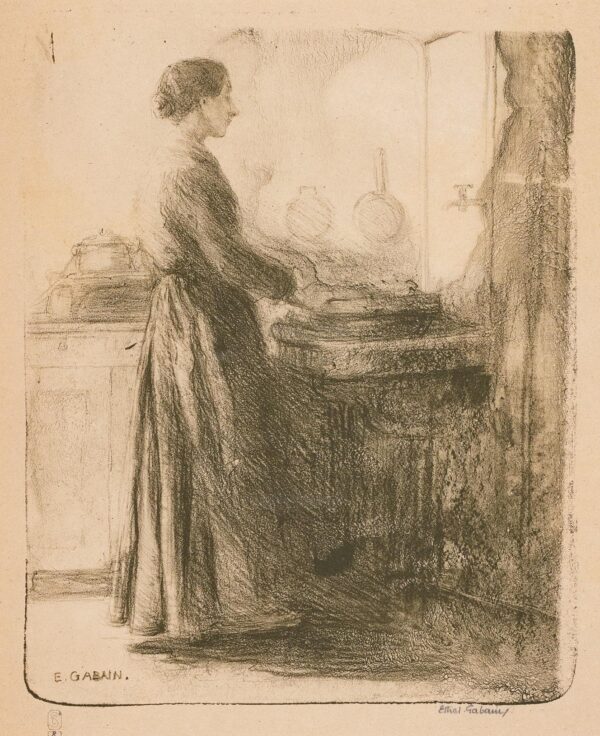
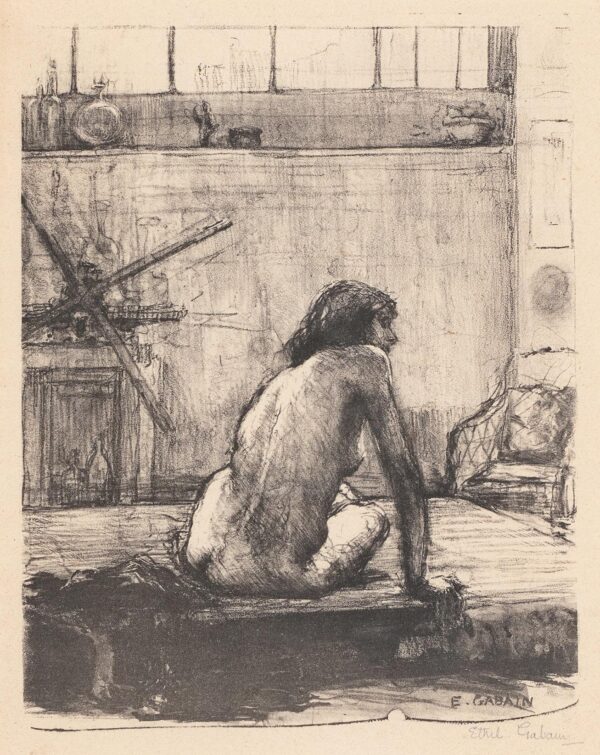
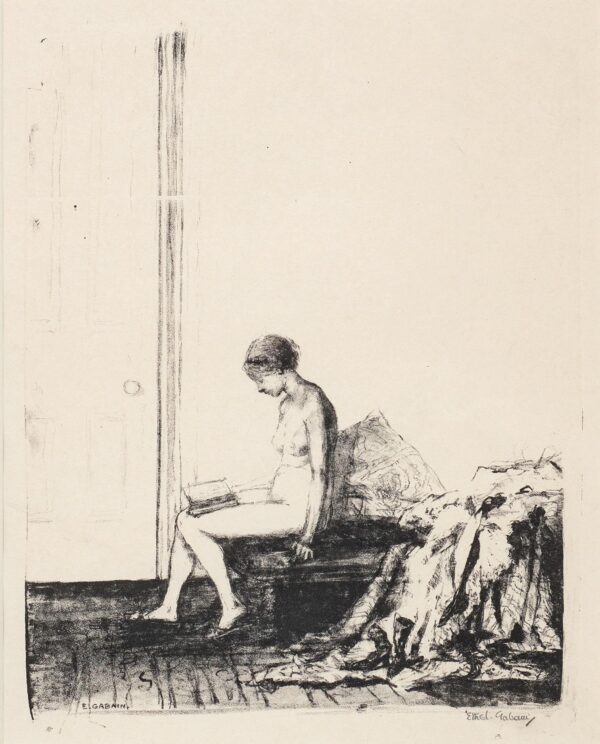
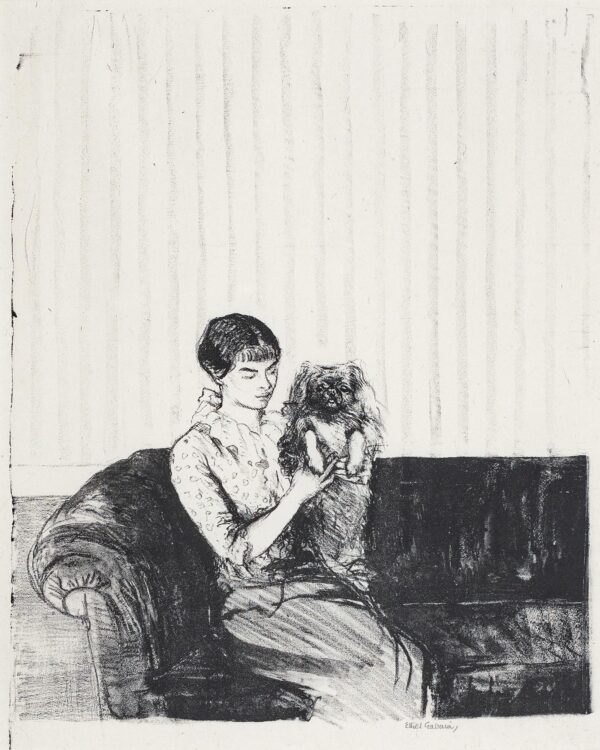
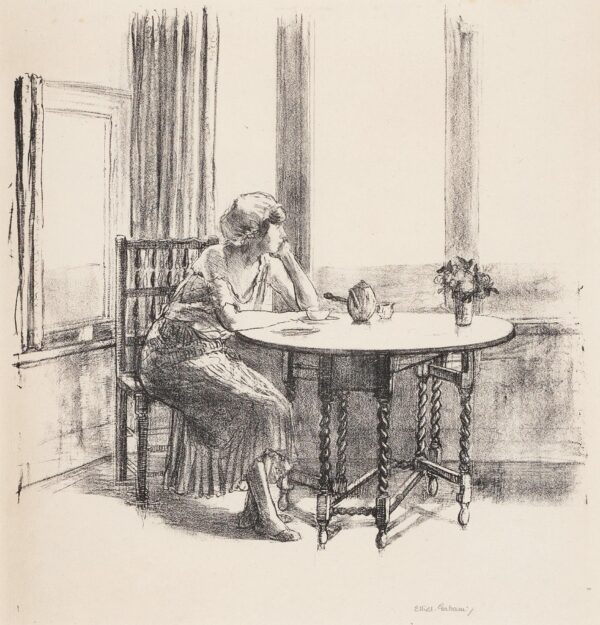
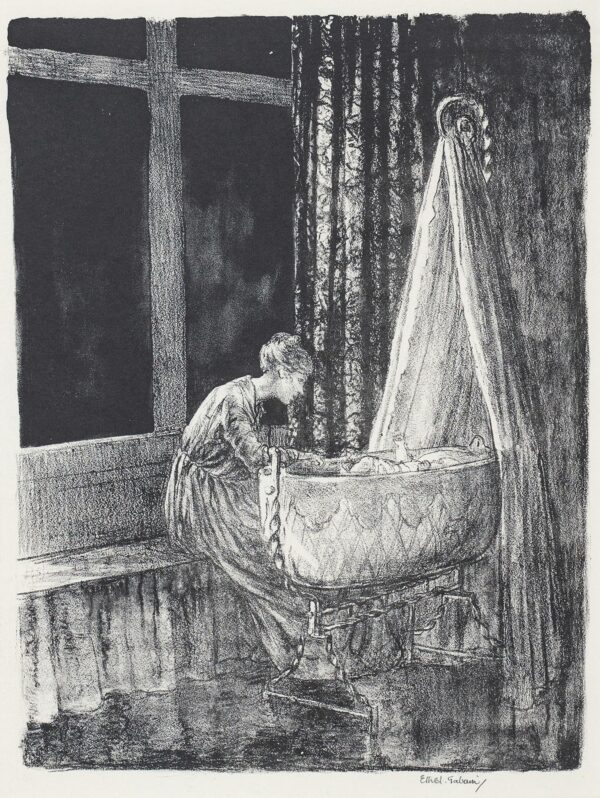
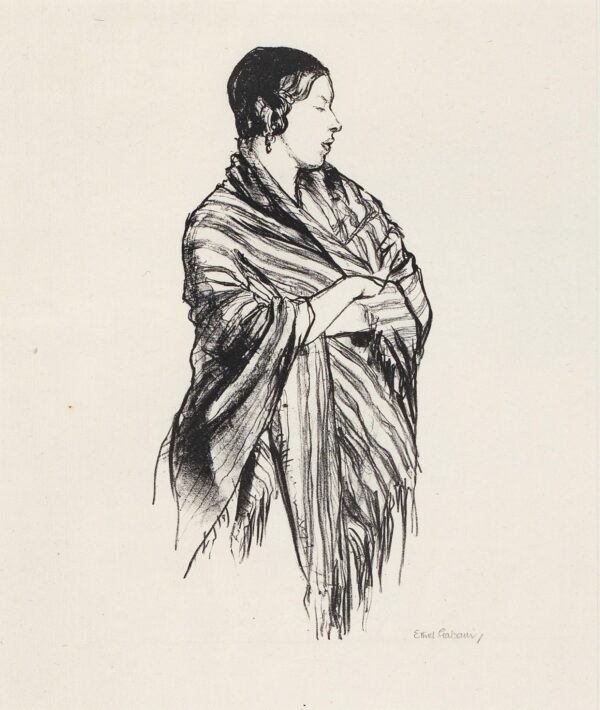
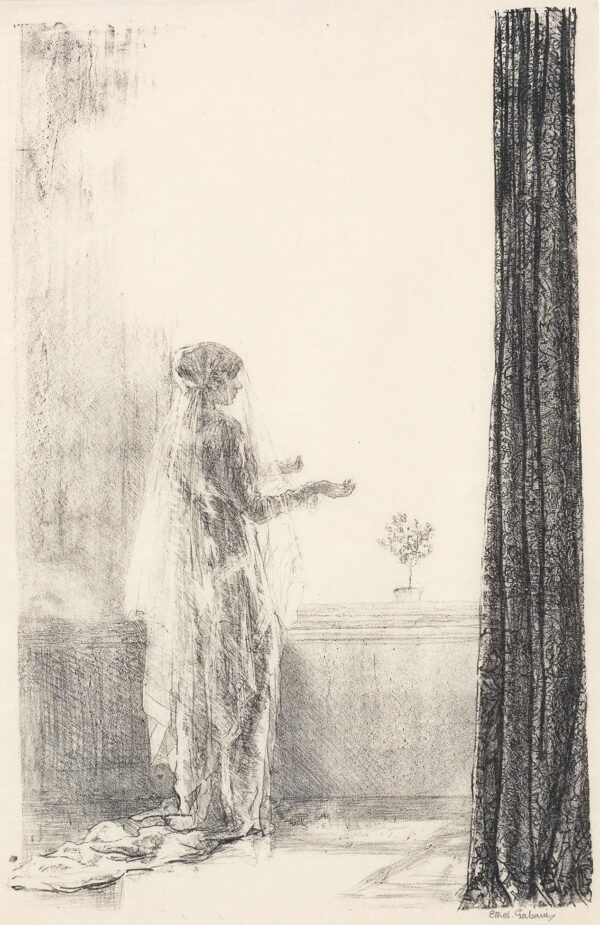
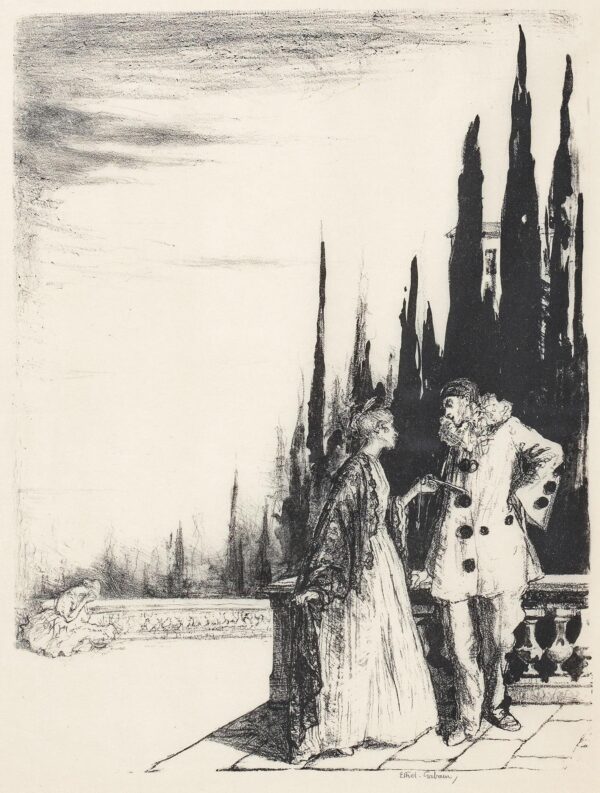
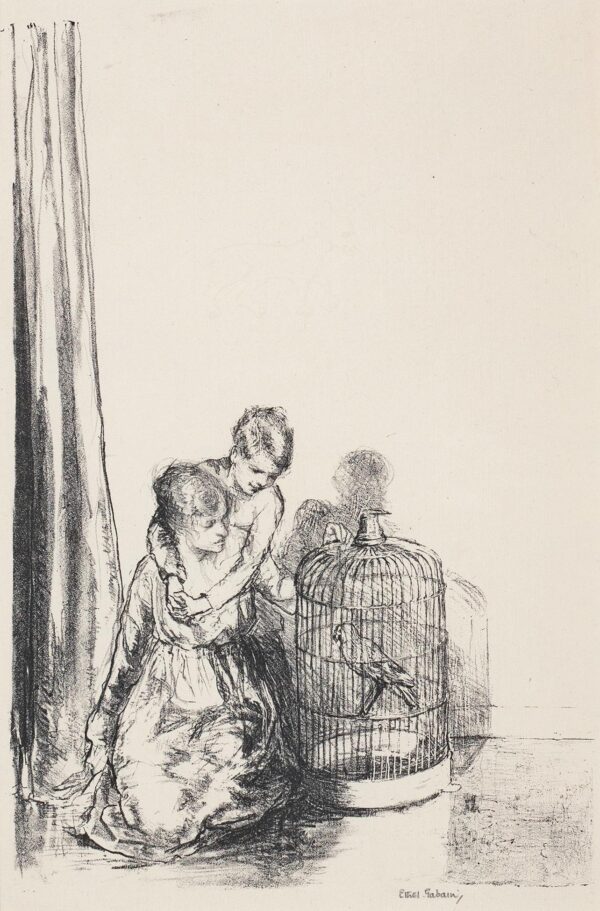
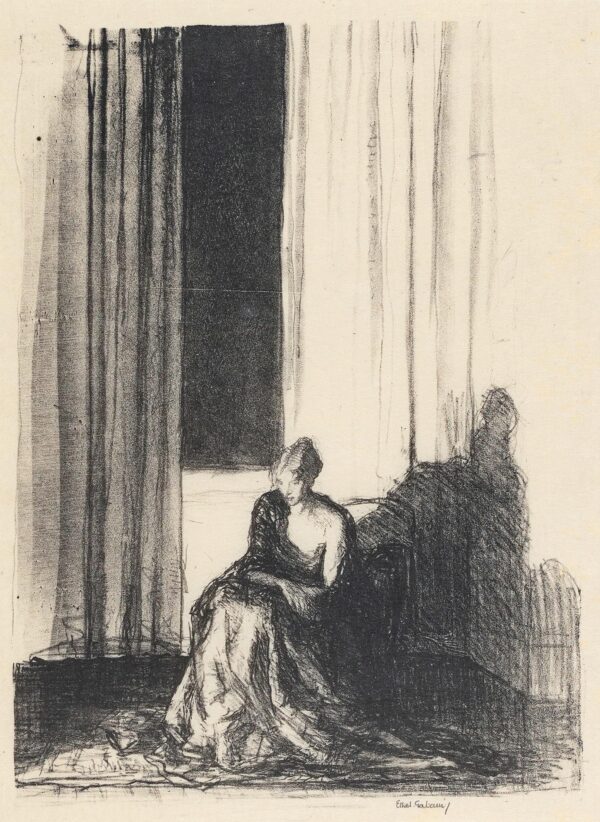
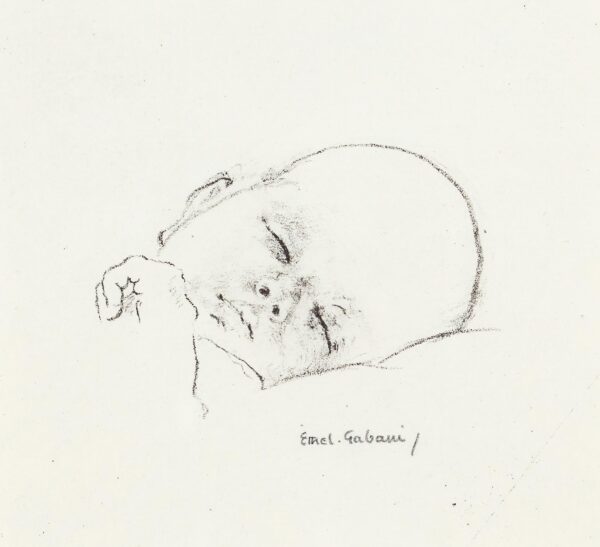
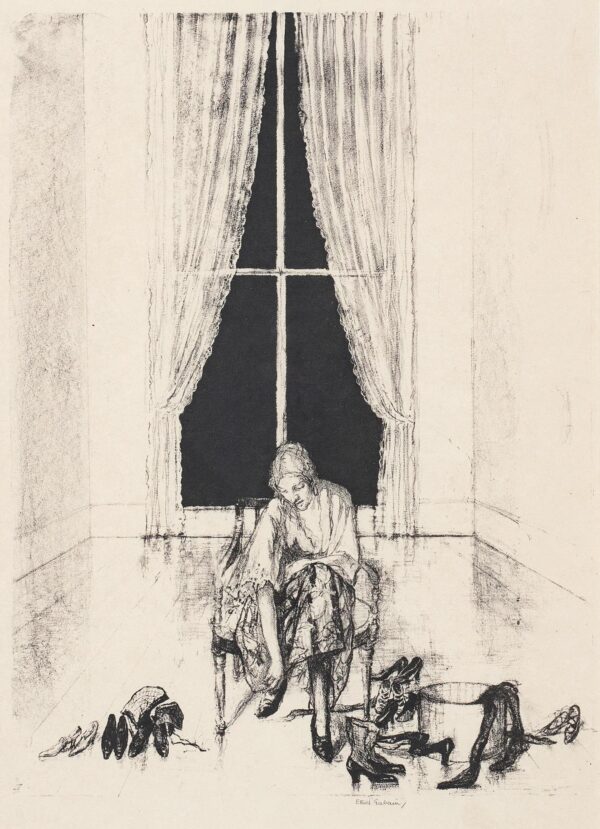
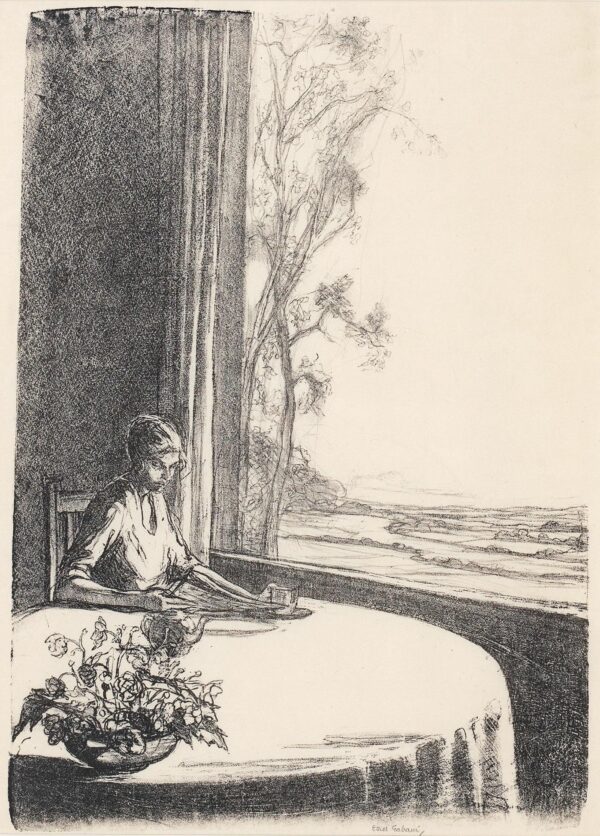
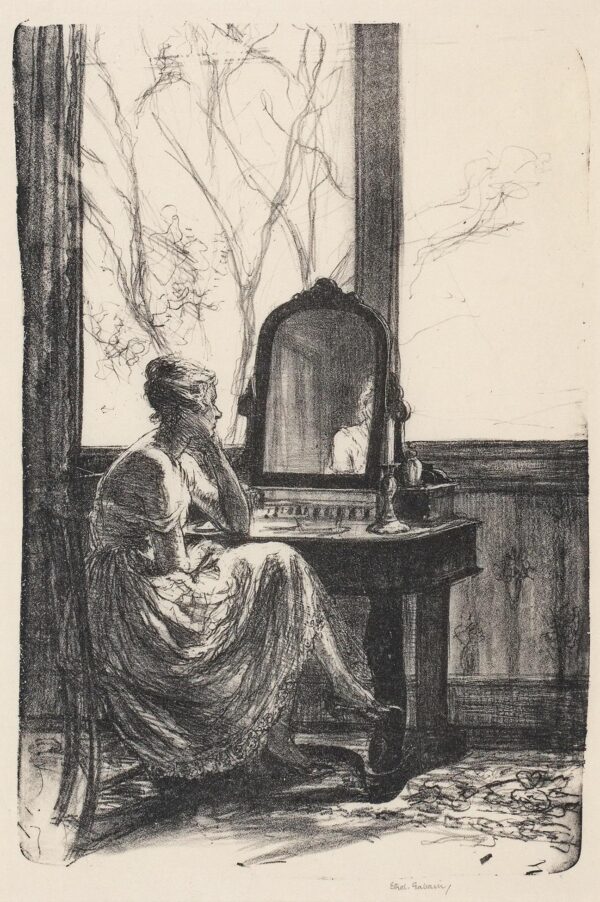
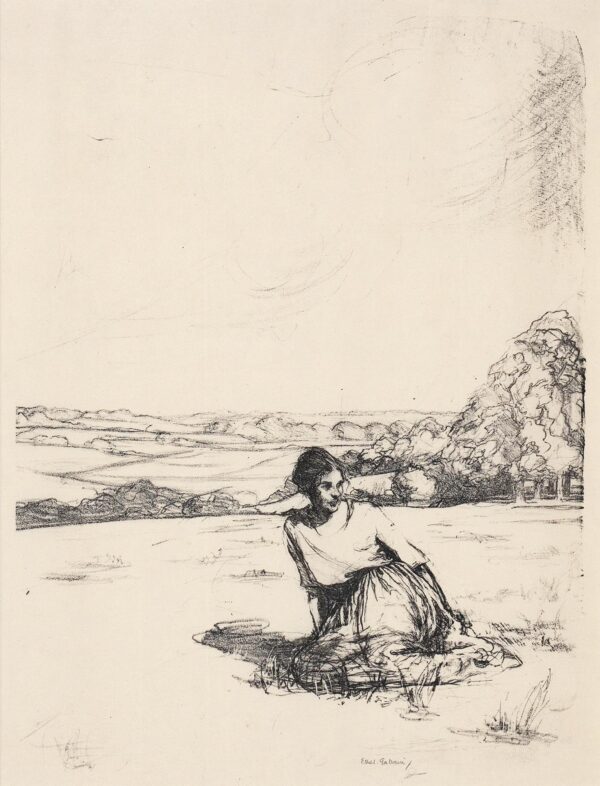
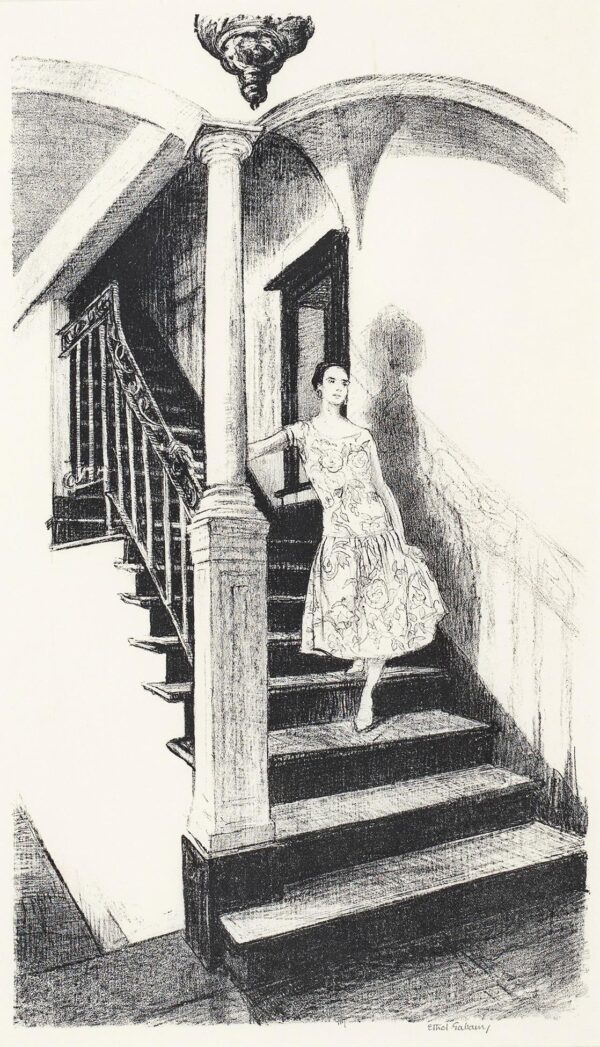
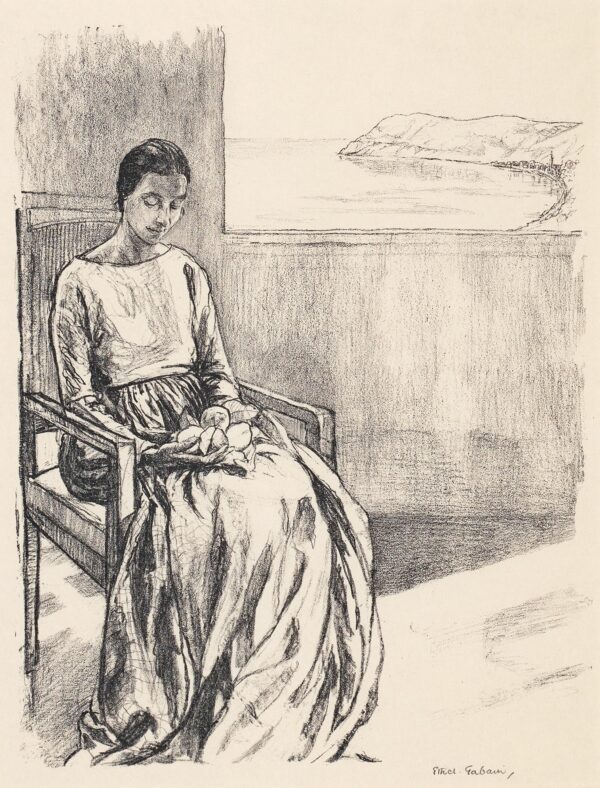
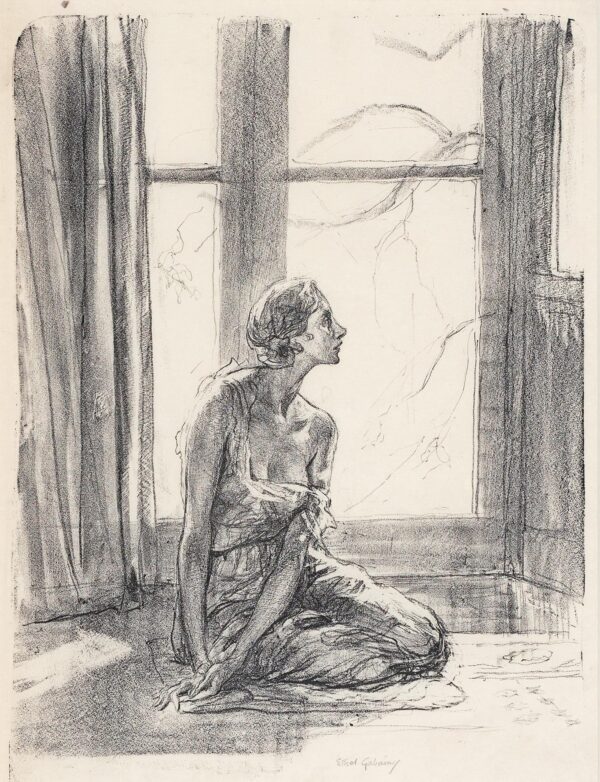
Ethel Gabain (1883-1950) was one of the few artists, man or woman, able to support themselves from the sale of lithographs in the early Twentieth Century. Her draughtsmanship and technical expertise were built on sound training at the Slade, the Central Schools and years practising in Paris. In 1909 she was invited to become a founding member of the Senefelder Club, established to promote lithography as an art form, and in 1911 was taken up by Harold Wright, of the dealers P&D Colnaghi, who was one of the great print publishers of the age.
What made Gabain’s success remarkable was not simply that she made her way in an art world dominated by men, but that it should come from prints that were almost exclusively concerned with ‘woman-hood’. Women were her subject in the literal sense; her compositions are dominated by single female figures in reverie. But many of her works can also be read an expression of her own emotional experiences; first as a struggling artist, then as a young mother and latterly as a mature woman experiencing the loss of a son and World War for the second time. Between 1906 and 1930, when most of her 300 lithographs were made, there is a gradual shift from a sense of ennui in her early works to an underlying strength and determination later on.
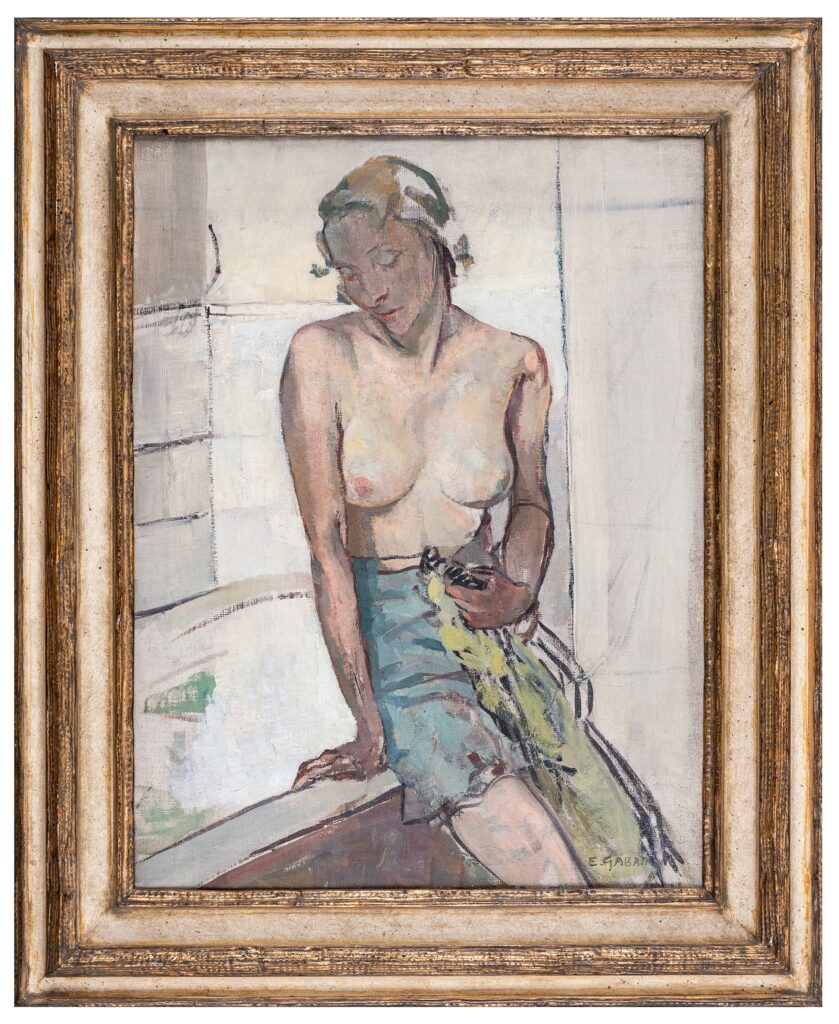
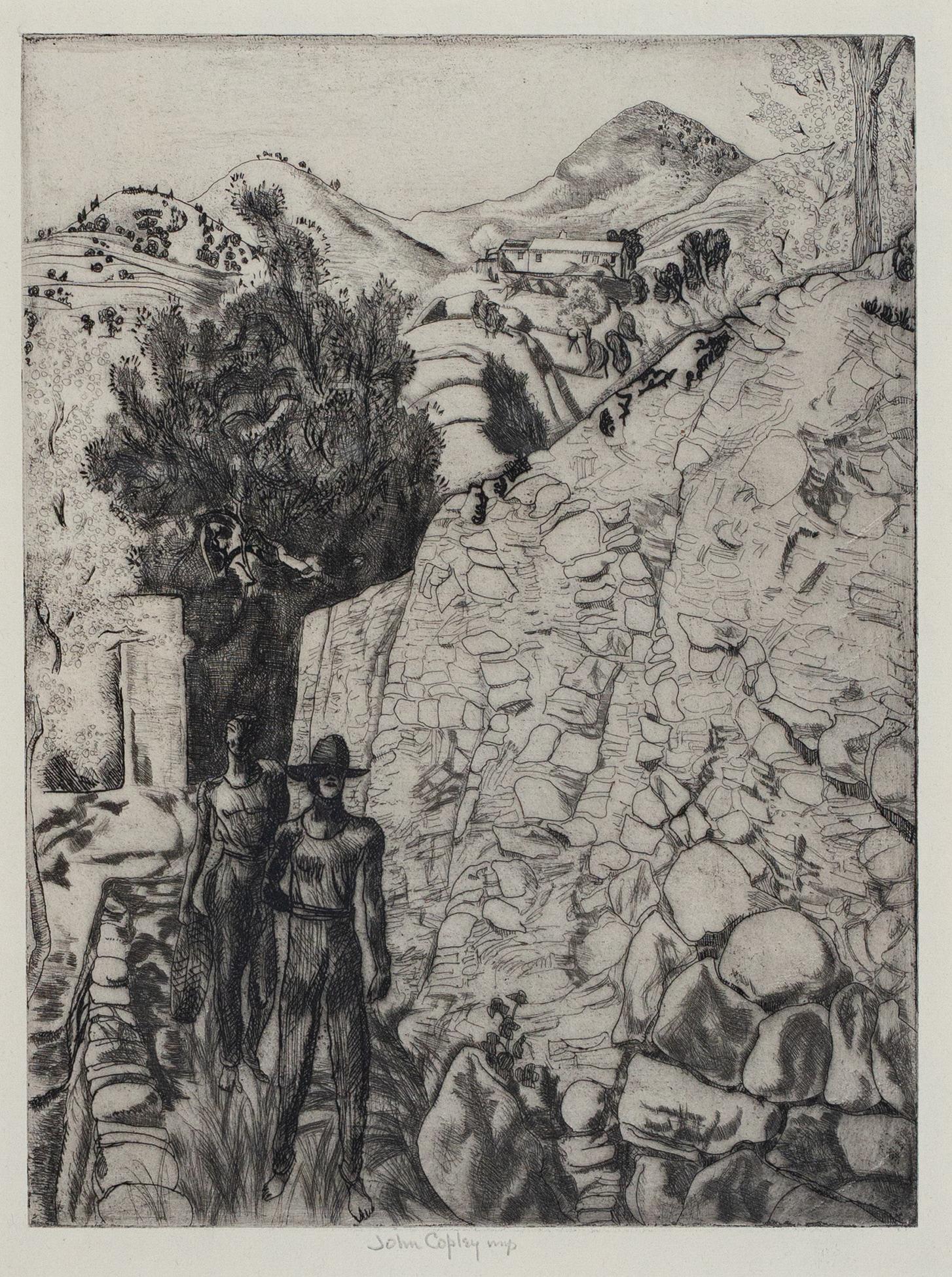
In 1925 Gabain took her family to Alassio in Liguria so that her husband, the artist John Copley R.B.A. (1875-1950) (click here for our stock of his works), could convalesce from a severe heart condition. Lithography had to be put aside and she turned to painting. When the family returned to England the print market was destroyed by the Wall Street Crash, so she continued to paint. She was elected a member of the R.B.A. in 1932 and the R.I. in 1933. Women remained her subject. She made portraits of many leading actresses of the time and pursued her obsession with the single female figure; the young model Carmen Watson became her muse at this time.
When World War broke out again, and despite the loss of a son, she offered her services to the Ministry of Information. She was invited to work for the War Artists Advisory Committee and asked to record the contribution of women to the War Effort. These works are her most lasting legacy. Gabain served as Vice President of the Society of Women Artists in 1934 and President in 1940.
Ethel Gabain (1883-1950) Carmen sitting on the bath. Oil on canvas. c.1935. 22×16 inches. (SOLD)
To read more about Ethel Gabain and John Copley Please visit www.copleygabain.com
we also recommend…
Susan Thomson, The Life and Works of Ethel Gabain, Manchester Art Press, 2008.