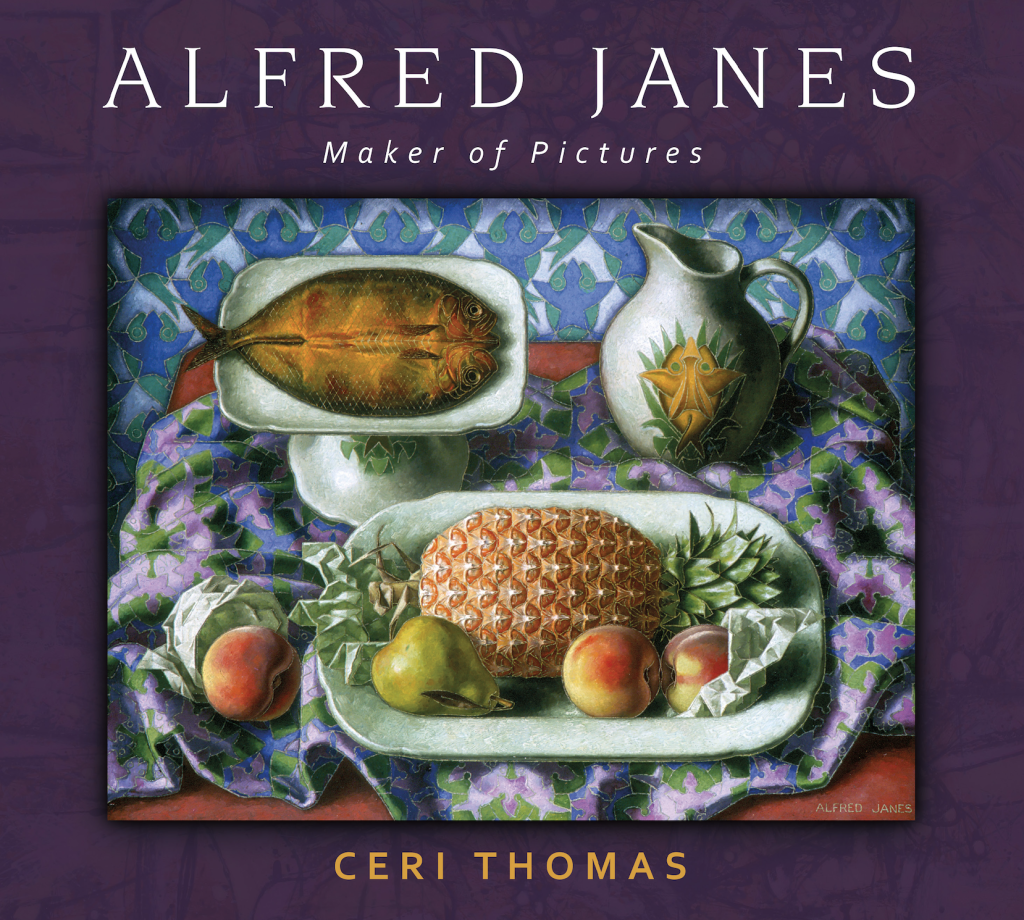
ALFRED JANES (1911-1999)
Paintings and Constructions
1930s – 1980s
from the Artist’s Estate
PRIVATE VIEW: Thursday 22nd October 6-8pm
The exhibition continues until Saturday 7th November
This exhibition celebrates the forthcoming, November publication of the first monograph on Alfred Janes
Ceri Thomas, Alfred Janes, Maker of Pictures, Parthian Press, 2026
CLICK HERE to pre-order a copy.
Alfred Janes was born in 1911 in the centre of Swansea, where his parents’ ran a successful fruiterer’s and florist’s business. He was educated at the Swansea School of Art and Crafts, a portrait he made of fellow student Mervyn Levy (1914-1996) winning him a scholarship to the Royal Academy Schools in 1931.
Despite the quality of the teaching at the Royal Academy Schools, Janes quickly became drawn towards the modernist work being shown in the nearby Cork Street galleries. He came to find the Royal Academy increasingly antiquated in its approach, and ultimately chose not to complete his course — as did his friend the artist William Scott. Instead, he found himself continuing to learn and develop through the social and artistic circles he had become part of in London and south Wales.
Among these were a group of bohemian friends from Swansea, including the poets Dylan Thomas and Vernon Watkins, the composer Daniel Jones, and fellow artist Mervyn Levy. The group became known as the Kardomah Gang, named after the Kardomah Café in Castle Street, Swansea, where they had often met.
Throughout the 1930s, even after drifting away from the Academy, Janes remained closely connected to this circle. He lived in a series of London flats shared with Dylan Thomas, Mervyn Levy and William Scott, and the friendships and artistic discussions that surrounded him became an important part of his development as a painter.
Much of Janes’ early work centred on still lifes and portraits of his friends. In 1935, several of his works, including a portrait of Dylan Thomas, were selected by Augustus John and Cedric Morris for an exhibition of ‘young artists of merit’. In the same year, Janes held his first one-man show at the Everyman Gallery in Hampstead.
In 1937, his work was included in an exhibition at the Mayor Gallery alongside artists such as Picasso, Braque, Derain and Utrillo. For Janes, who had become increasingly interested in the modernist movement outside the Royal Academy, the exhibition placed his work in the company of artists he greatly admired.
In 1936, Janes had returned to Swansea, where he began teaching part-time at the Swansea Art School. Teaching would become a lifelong part of his career. Alongside it, he continued to paint, maintaining the practice that would remain at the centre of his life.
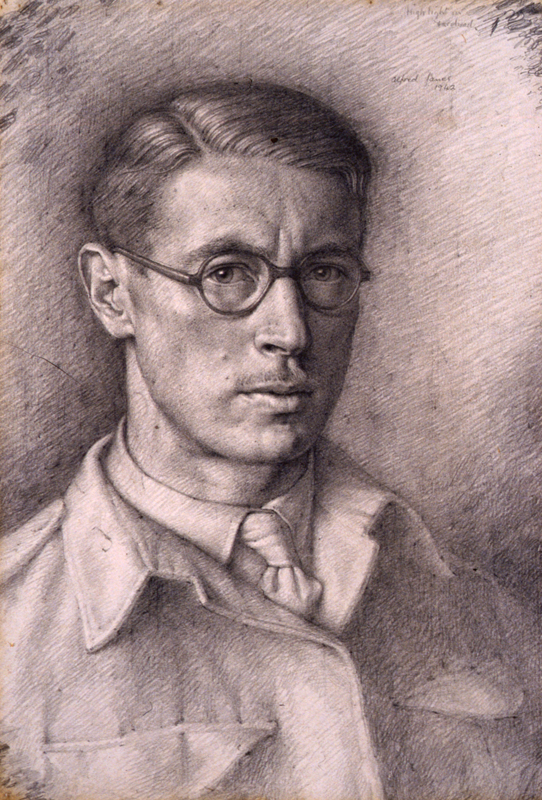
When war broke out, however, Janes was obliged to put painting on hold. Because of his poor eyesight, he was conscripted into the Pioneer Corps rather than the fighting forces. He was eventually stationed in Egypt, where he became an army captain and worked running a prisoner-of-war camp. While there, Janes learned Italian from a young prisoner, Dr Gianni Bernardini. The two formed a friendship that survived the war, and they remained close for the rest of their lives.
When Janes returned to Swansea after the war, he found a city profoundly changed by the bombing. Castle Street, the centre of his childhood and the meeting place of the Kardomah Gang, had been devastated. His former studio in the adjacent College Street and the Kardomah Café had both been destroyed.
He also returned to a family life that the war had kept him from experiencing. While on leave during the war, Janes had married Mary Ross, but he had not met their son, Ross, until his his return home in 1946. After years away, in an almost unrecognisable Swansea, and with a very different life before him now, Janes found returning to painting “hellishly difficult”.
In 1953 the Janes family moved to Nicholaston Hall, a scenic farmhouse in Gower, Wales. A year later their daughter Hilly was born. While at Nicholaston Hall they often entertained and maintained their Swansea friendship as an active part of artistic life of Swansea. In fact, Kingsley Amis’ book That Uncertain Feeling was based on the crowd which Janes moved in.
In 1963, they moved to Dulwich Village after Alfred Janes was offered a part-time post teaching at Croydon College of Art. He was to remain teaching on a part time basis until his early 70’s.
THE EXHIBITION
This exhibition brings together work spanning Alfred Janes’ career, from his meticulously executed still lifes of the 1930s, through his experimental works of the late 1950s and 1960s, to works of the 1980s that repurposed paintings from the 1960s. All come from the Artist’s Estate. Janes’ work changed dramatically throughout his life, making it difficult to draw a single visual thread through its many forms. What can be traced across his work, however, is a sustained interest in craft, music, pattern making and a scholarly knowledge of prevailing trends in contemporary art.
1930s
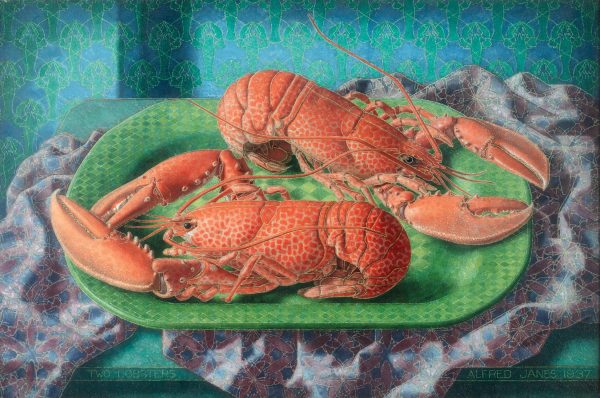
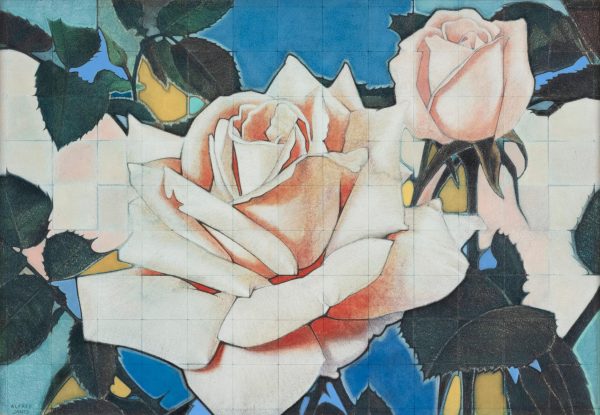
Janes’ early works are extraordinarily rare. He spent months meticulously composing and constructed them. He spent most of 1937 making three closely related paintings, ‘Two Lobsters’ (Cf. No.1), ‘Hyacinths’ (Glynn Vivian Art Gallery, Swansea) and ‘Kipper and Pineapple’ (Private Collection). His unusual technique involved incorporating complex geometrical patterns throughout his work, and laboriously incising lines in the ground; tracing his subjects and following the the underlying patterns. His pattern making was often witty and playful, but it was also a serious expression of his interest in mathematics and music and his understanding of how musical composition ‘is made of rhythm, the geometric divisions of time’ (Ceri Thomas, Alfred Janes, Maker of Pictures, Parthian Press, 2026, P.24).
1945 – 1955
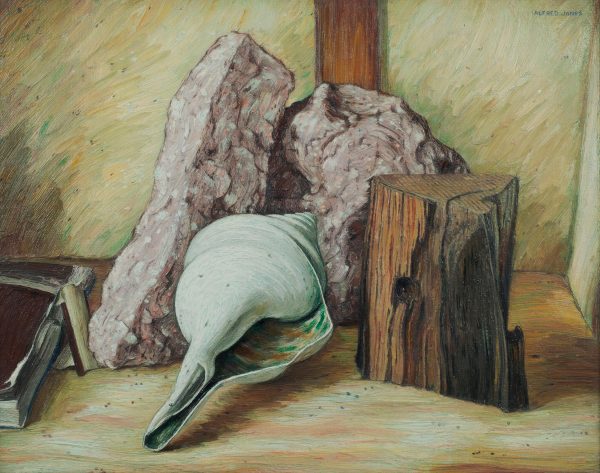
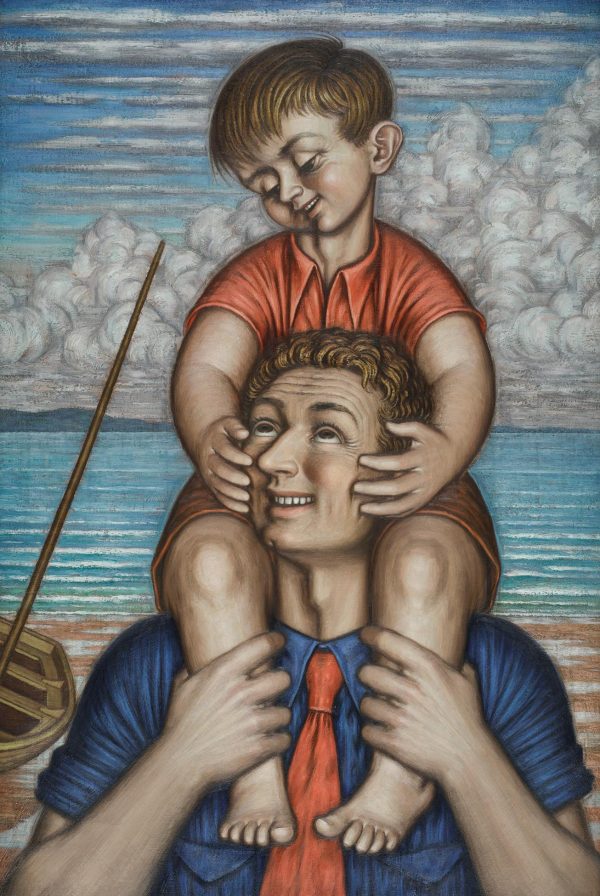
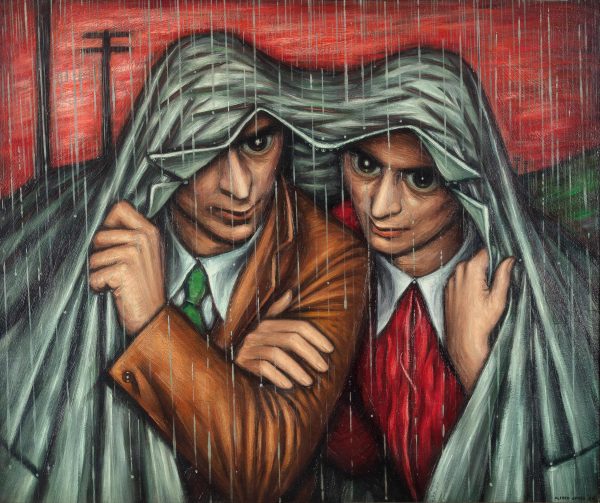
Having made only a small number of fine pencil drawings during the War, when Janes returned to painting he adopted a more direct manner. His concern for highly finished surfaces was abandoned and he embraced impasto. He made still lifes (Cf. No.2) and a number of very successful portraits of contemporaries, many of which can now to be found in museums and galleries in Wales. He also made figure compositions. Sometimes playful or celebrating his beloved Gower (Cf. No.3), they could also be deeply symbolic and political works such as ‘Western Picnic’ (Cf. No.4), which was made under the looming threat of nuclear proliferation.
Late 1950s
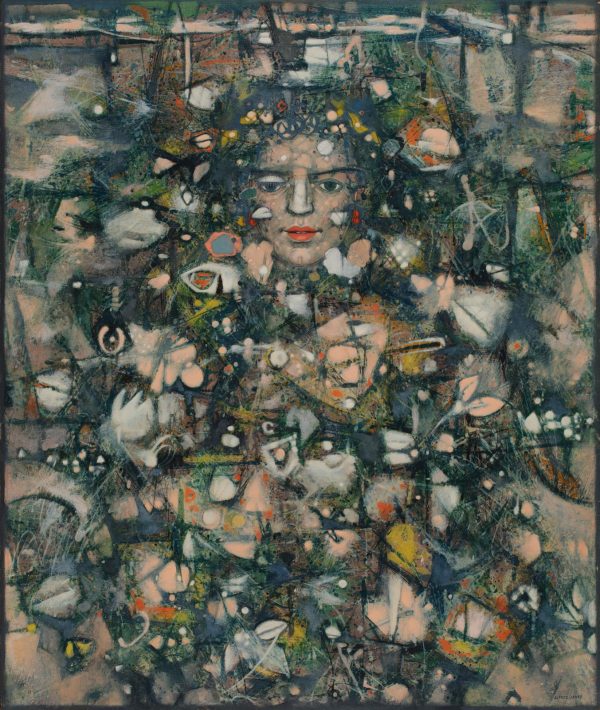
In the ‘50s, while based in Gower, Janes turned to more experimental modes of working. Though very different in appearance to his work of the 1930s, these paintings are governed by the same instinct for structure. Janes broke up the surface of the image in a way that caused the image to become fragmented and abstracted while keeping the subject legible.
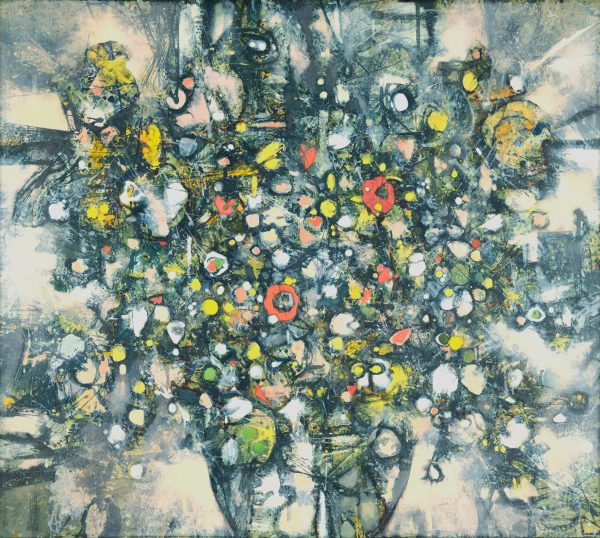
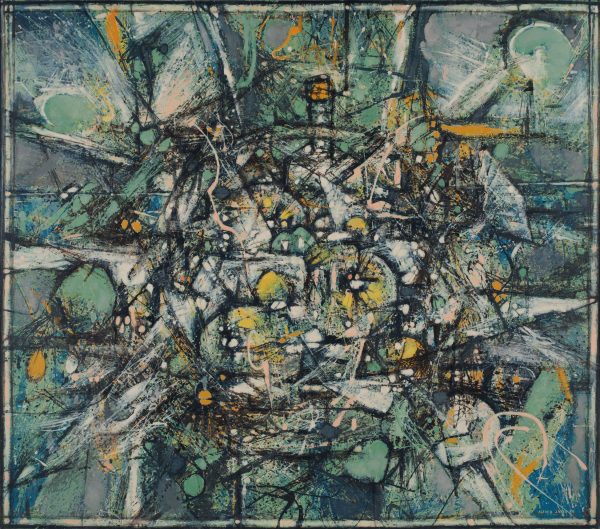
Early 1960s
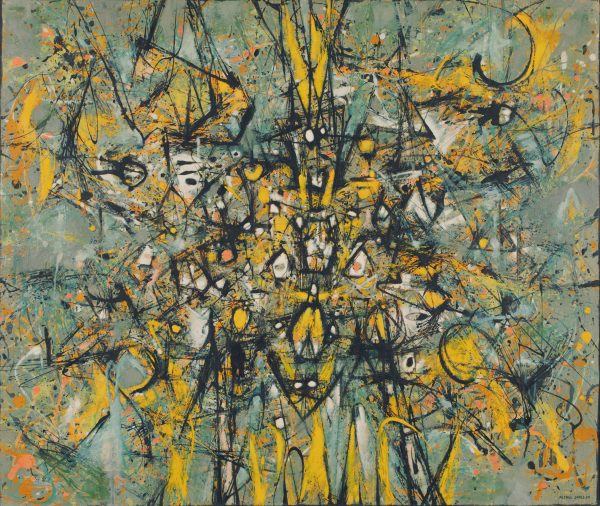
In the early 1960s Janes’ work developed towards complete abstraction. These ‘liquid oil’ paintings were worked flat, by pouring and dripping his pigments onto paper. His most free and expressive works, they were, as ever, underpinned by a technical fascination as he experimented with non-drying media such different oils and paraffin. This experimentation allowed him play with viscosity and keep paint wet and workable as he meticulously built up his images.
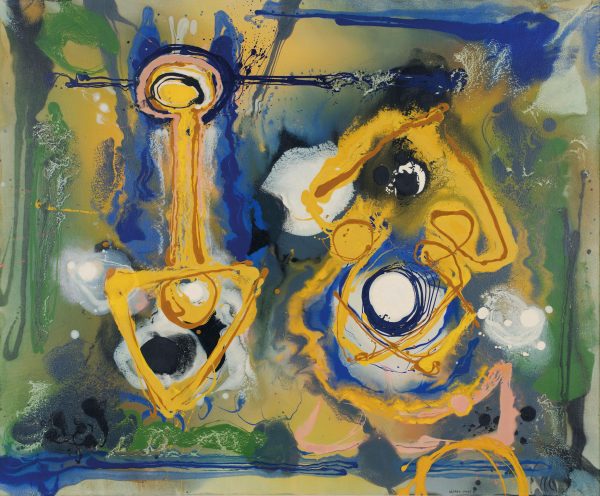
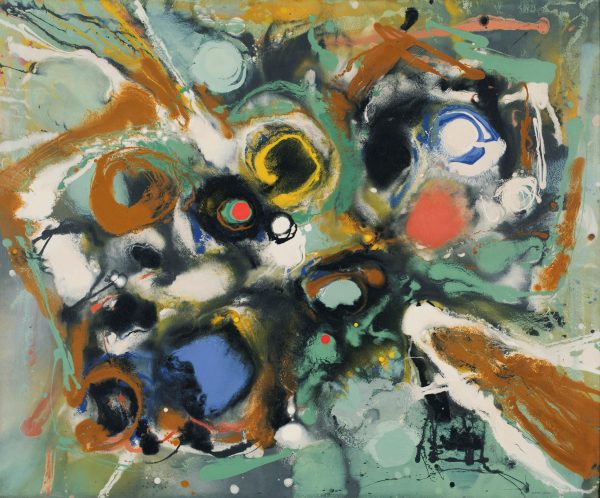
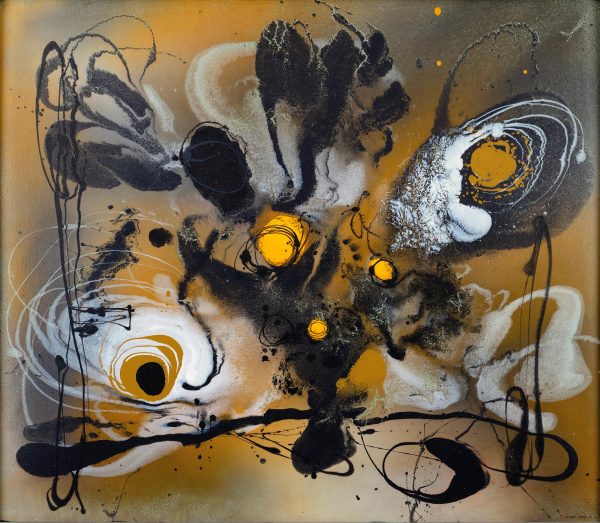
Late 1960s
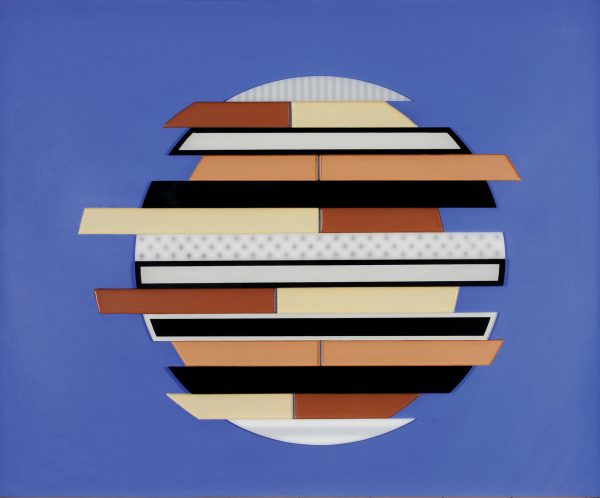
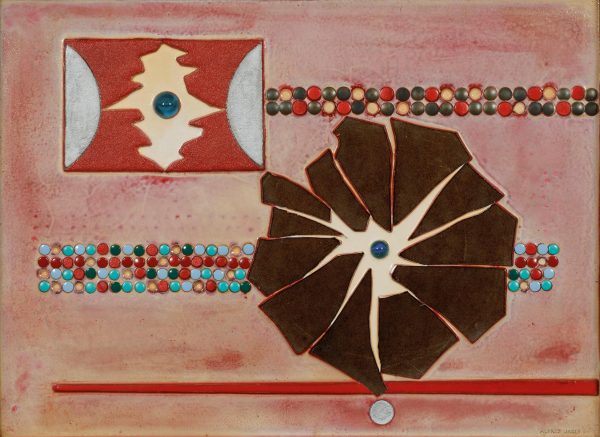
In 1963 Janes moved to London and worked from his home in Dulwich. Contemporaneously to the development of Pop and Op Art (one of his teaching colleagues was Bridget Riley) he began making constructions, working with new materials including sand collected from near his home in the Gower Peninsula, Perspex, glass, marbles and PVA paints. As with work from all periods of his career, his interest in music, geometry and mathematics shows through.
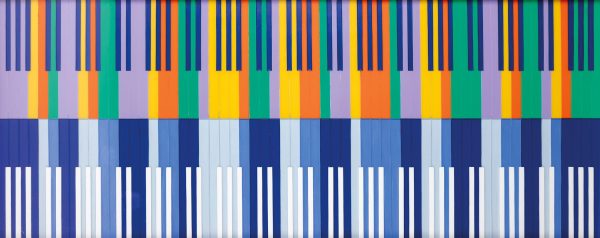
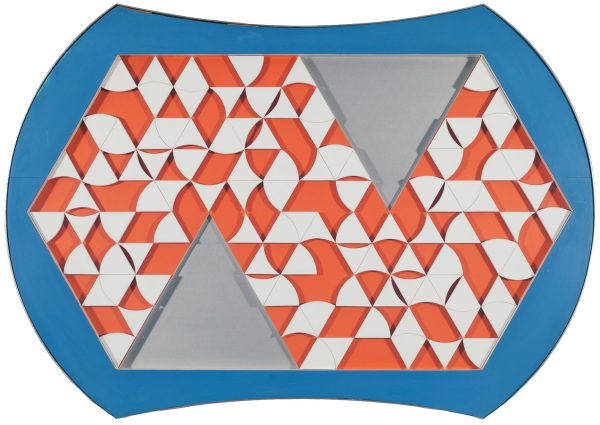
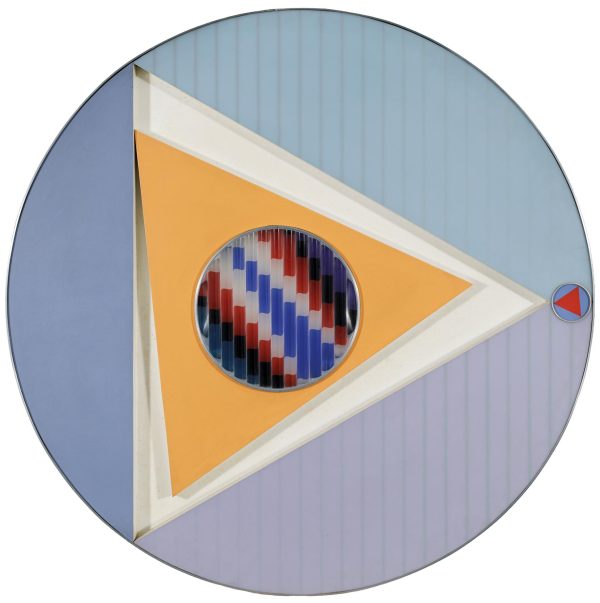
1970s
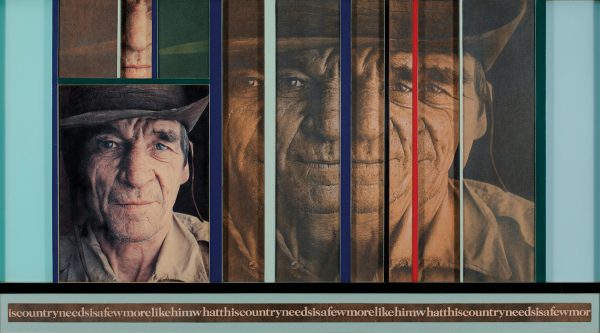
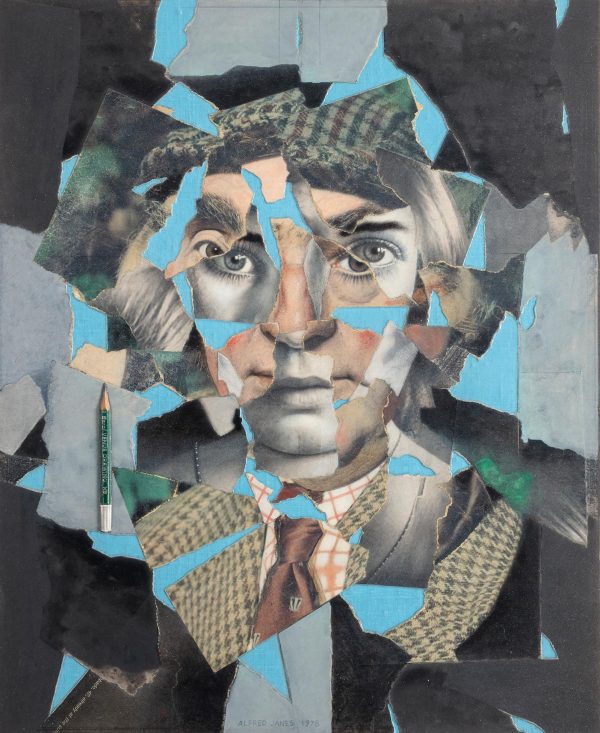
Alongside his constructions of the 1960s and into the 1970s Janes began to make collages which show a continuing awareness of Pop and even Performance Art. Another of his teaching colleagues was Bruce McLean. Some of these were incorporated into his perspex constructions (Cf. No.17), others were made as stand-alone photo collage portraits or compositions (Cf. No.18).
1980s
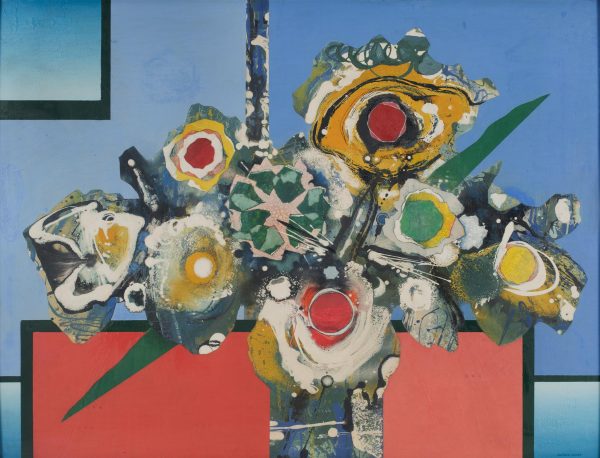
In the 1980’s Janes decided not to make new works and instead began to repurpose his previous paintings. He did so intentionally and carefully, keeping elements of his earlier work visible. As with all of Janes’ work, these are perfect expressions of ‘their time’, his abstract paintings of the 1960s being transformed into highly successful 1980s paintings containing allusions to the representational and to flowers on tables in particular, thereby coming full circle.
Photography credits (above): Vince Bevan and Lucid Plane, by kind permission of the artist’s family.
This exhibition celebrates the forthcoming, November publication of the first monograph on Alfred Janes, written by Ceri Thomas.
CLICK here to pre-order a copy.
In addition to the publication of the new book, the Glynn Vivian Art Gallery in Swansea will be displaying its fine collection of works by Janes from Thursday October 15th – Sunday 3rd January 2027. CLICK HERE for more information.