D. Y. CAMERON
Etchings 1889-1931
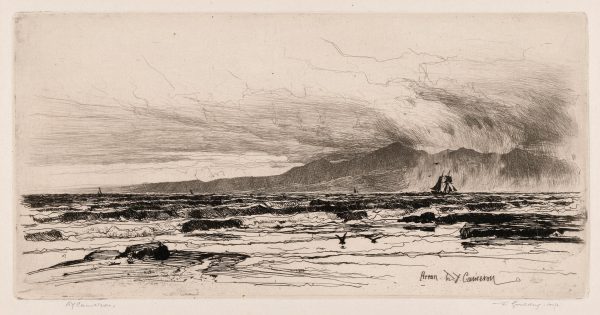
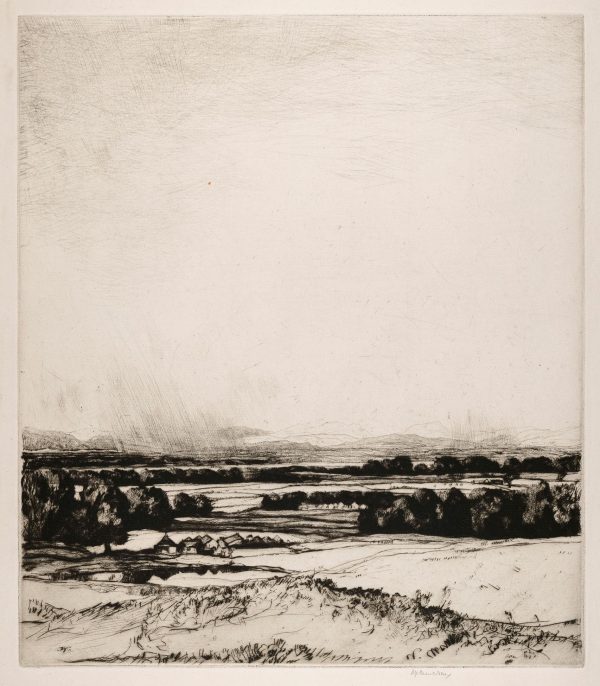
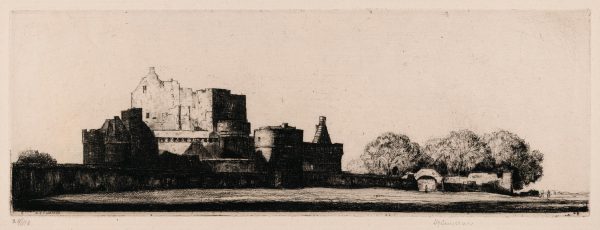
The son of a Presbyterian minister, Sir David Young Cameron R.A. (1865-1945) studied at the Glasgow Academy before attending the Glasgow School of Art and Edinburgh School of Art. He took up etching around 1887 on the recommendation of George Stevenson, an amateur etcher and friend of the printmaker Sir Francis Seymour Haden (1818-1910). Stevenson would go on to mentor Cameron and help with the early preparation and printing of his famous Clyde Set (cf. no’s 1-7).
Cameron was elected as an associate to the Royal Society of Painter-Etchers (R.E.) in 1889 but resigned in 1902 alongside William Strang (1859-1921) over the inclusion of reproduction pictures in their exhibitions. He and other breakaway printmakers then established the Society of Twelve. He joined the Royal Society of Painters in Watercolour (R.W.S.) in 1904, on the same evening as John Singer Sargent (1856-1925), and in 1911 was elected both an associate engraver to the Royal Academy (full R.A. 1920) and an associate of the Royal Scottish Academy (full RsA 1918).
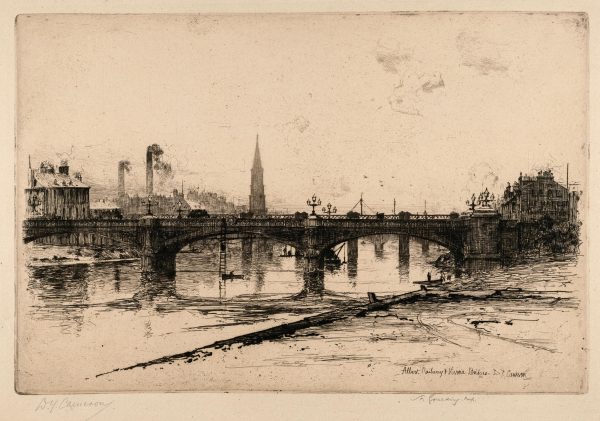
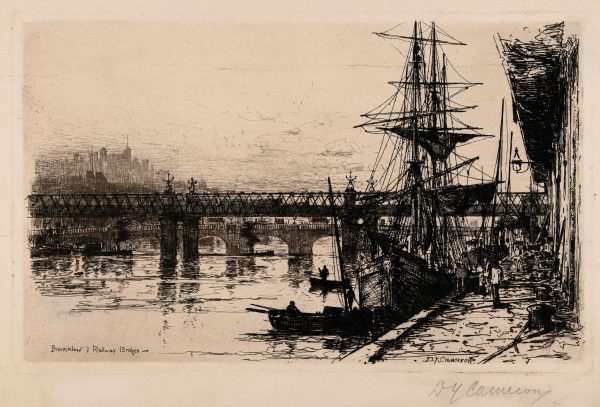
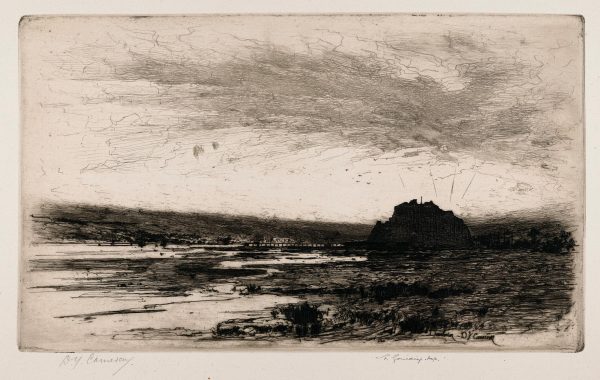
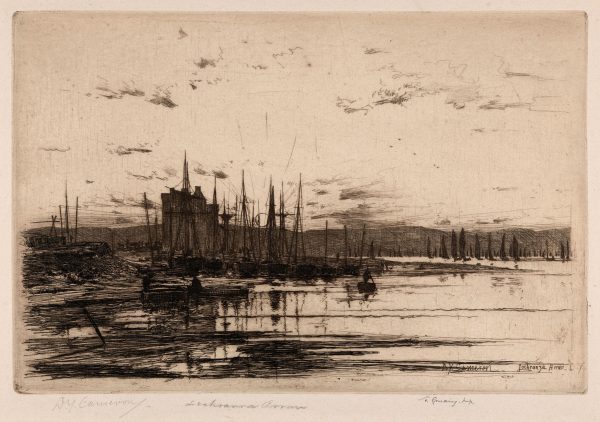
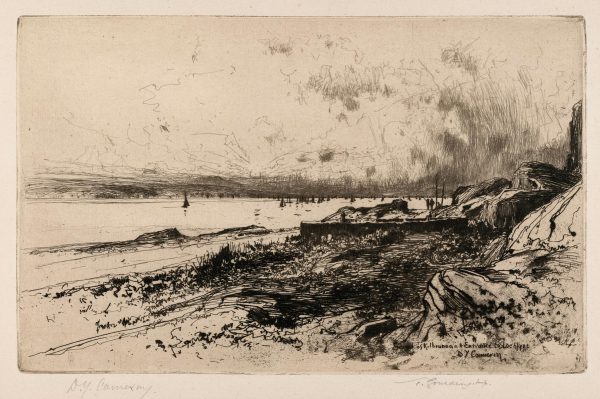
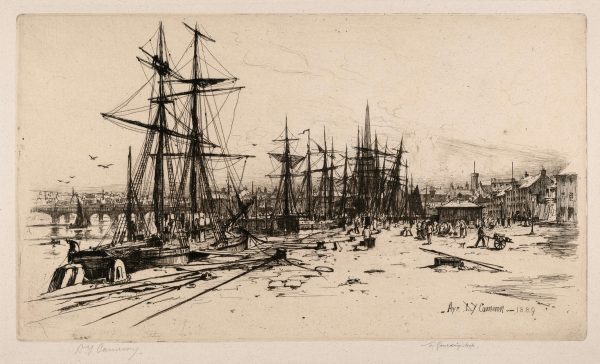
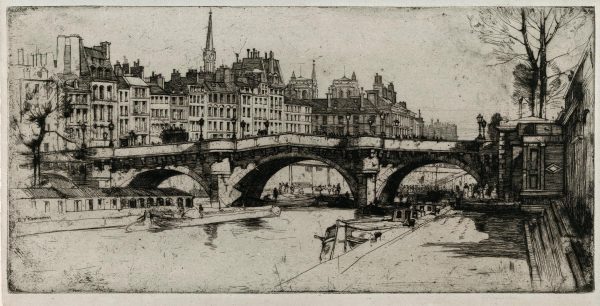
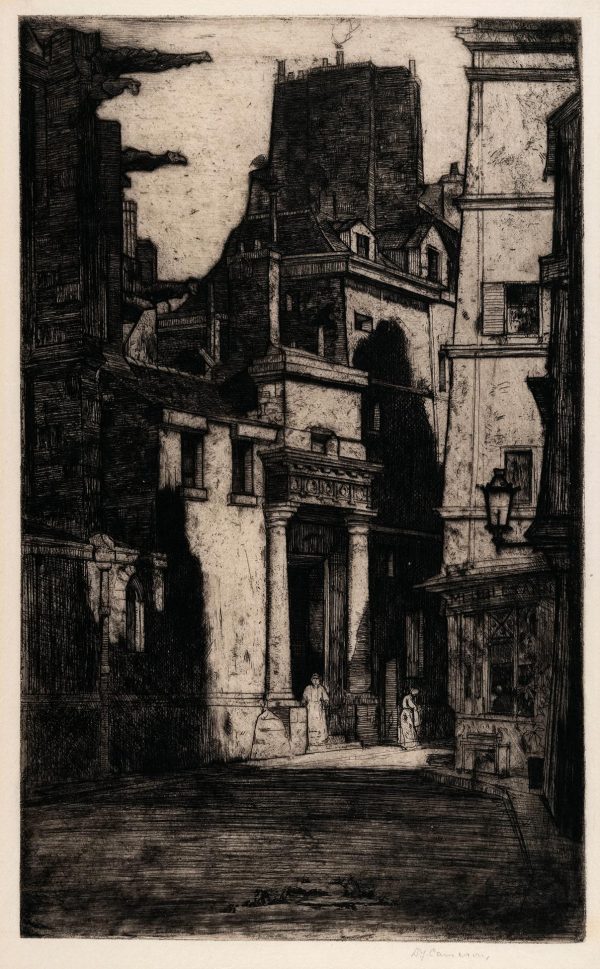
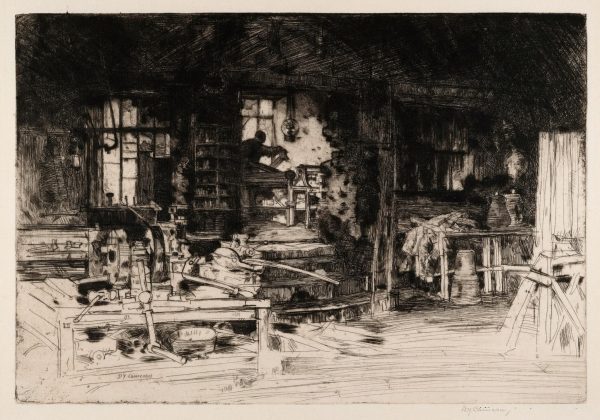
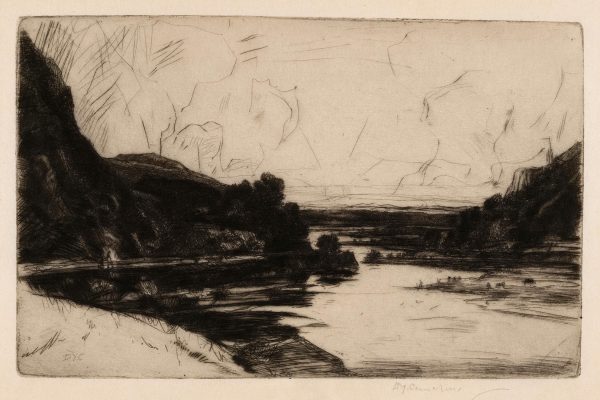
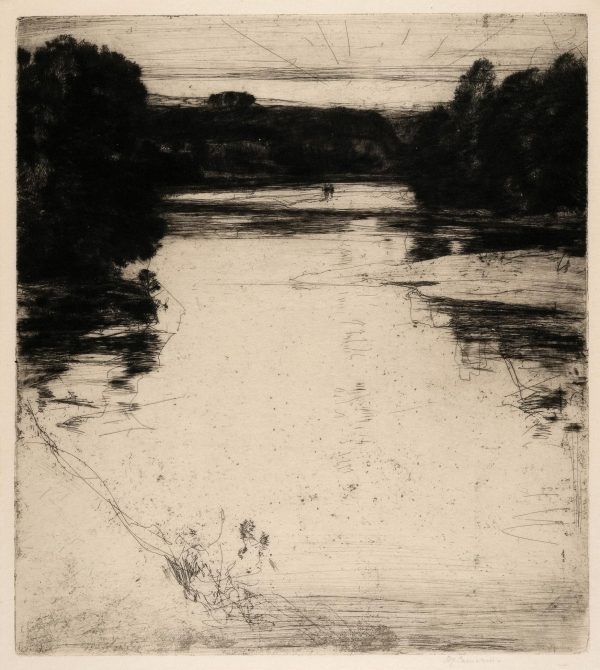
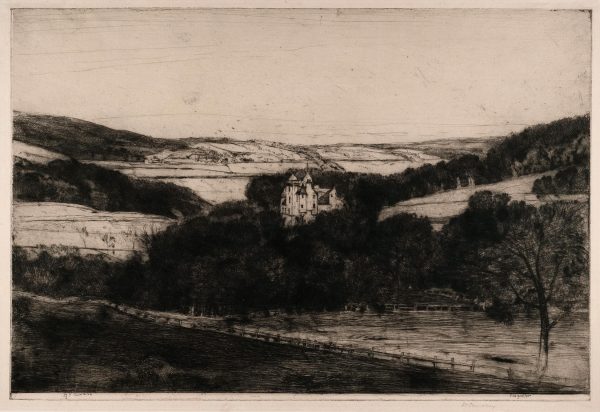
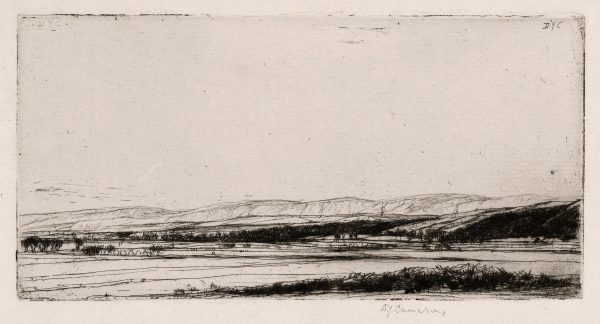
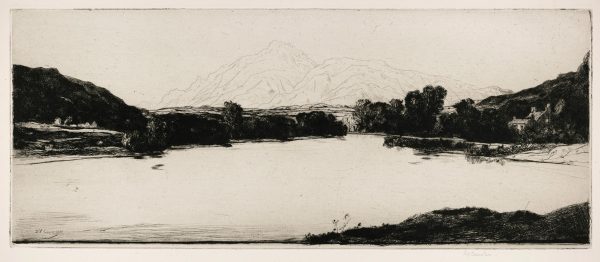
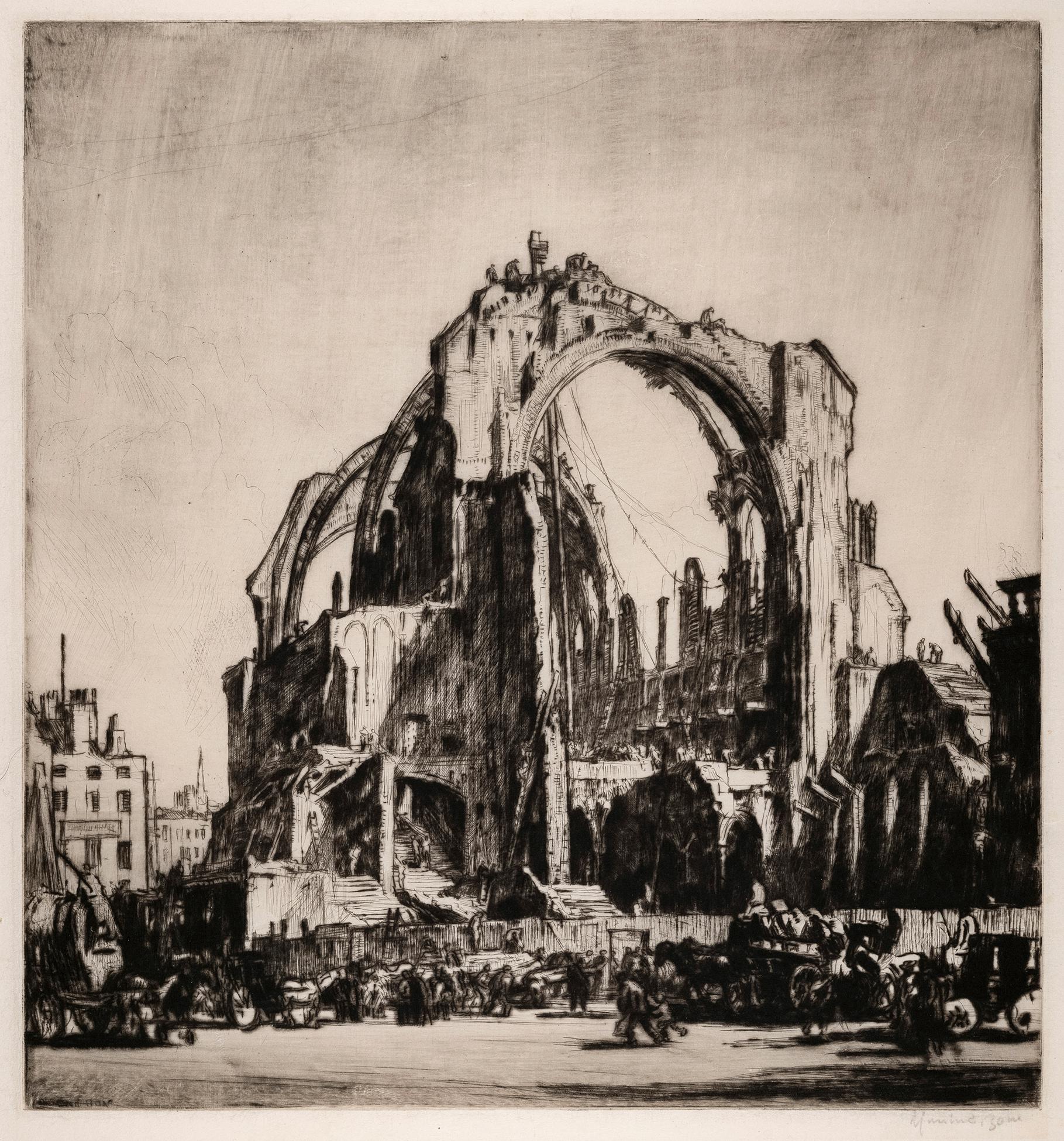
Cameron often worked in series, producing several ‘Sets’ of prints in small, but exceptional editions each focusing on a different geographical location. The first of these sets was The Paisley Set (1887), followed closely by The Clyde Set (1889) (cf. no’s 1-7). In 1892 he produced his first foreign series, The North Holland Set, which was then followed by The North Italian Set (1896), The London Set (1902), The Paris Set (1904) (cf. no’s 8-9) and finally, The Belgian Set (1907). These sets could reach exorbitant prices. In 1919 a complete edition of The North Italian Set sold for £1290 (~£57,000 adjusted for inflation); amazing considering the Set was originally available for £30 at the time of their release in 1896! Despite the popularity of Cameron’s European prints, it is nearly unanimously agreed that his greatest prints are those of his Scottish landscapes.
Cameron’s wife, Lady Cameron, passed away in 1931 and soon after he produced his final print, never truly recovering from the loss. His technical mastery, particularly in capturing mood and atmosphere in landscapes, led to him being considered among the likes of Whistler (1834-1903) and Haden (1818-1910) as one of the great proponents of print making in last years of the nineteenth and early years of the twentieth centuries.
These works are all sold in acid free museum mounts.
‘FR’ Nos. refer to Frank Rinder’s, D. Y. Cameron: An Illustrated Catalogue of his Etchings and Dry-Points, 1887-1932, published 1932.
LIST 561
July 2025
Ardizzone, Bawden, Beaumont, Binder, Colquhoun, Creme, Cruikshank, Durrant, Griggs, Lear, Legros, Nixon, Peile, Piper, Pissarro, Roberts, Sickert, Slater, Smirke, Stephenson, Strang, Sutherland, Turner, Underwood, Watts, Wilde … and more!


 VIEW NOW!

FORTHCOMING
Tuesday 22nd July @ 5.30pm
LIST 561 (Part II)
New Stock for July 2025

Tuesday 5th August @ 5.30pm
SUMMER SELECTION 2025!

Tuesday 12th August @ 5.30pm
ELIZABETH CAMPBELL
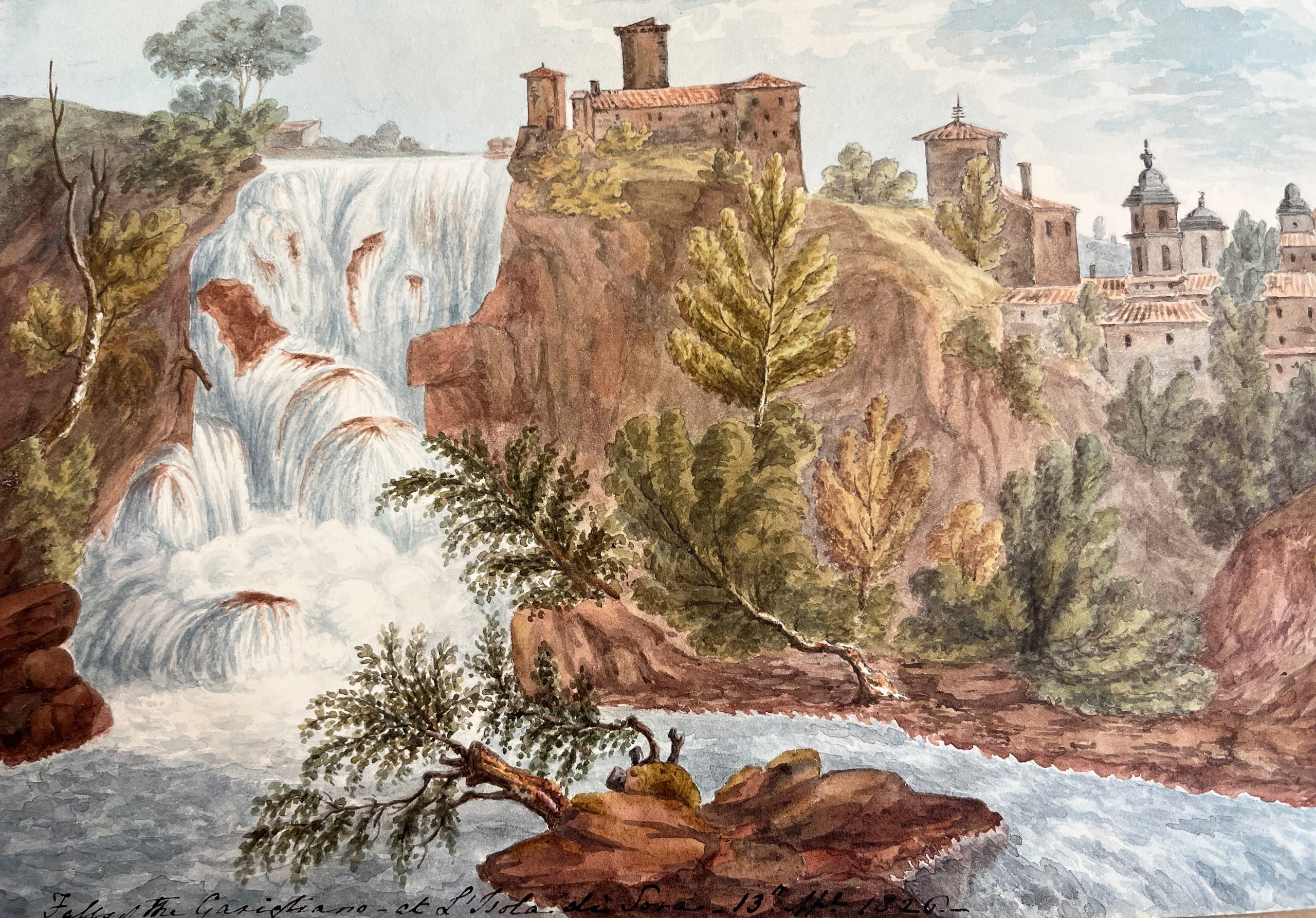
A Tour in Lazio & Abruzzo, 1826