MUIRHEAD BONE
Etchings 1904-1935
Born in Glasgow in 1876, Sir Muirhead Bone was originally destined for a career in architecture. Spending four years as an architect’s draughtsman before completing his apprenticeship and enrolling at the Glasgow School of Art, where he had begun taking evening classes whilst still working as an apprentice.
Bone began etching in 1898 without formal training, which lent his work a distinctive originality. He owes much to his apprenticeship, which gave him a meticulous eye for detail, a knowledge of construction and a sureness of hand, all qualities which came to define his etchings.
After moving to London in 1901, Bone was introduced to William Strang, Dugald MacColl, Alphonse Legros and joined the New English Art Club, with whom he would exhibit regularly. His first solo exhibition was held at the Carfax Gallery in 1902 and Bone quickly gained international acclaim. In 1904, he became a founding member of the relatively short lived, Society of Twelve (1904-1915), a group whose purpose was the promotion of original prints and drawings.
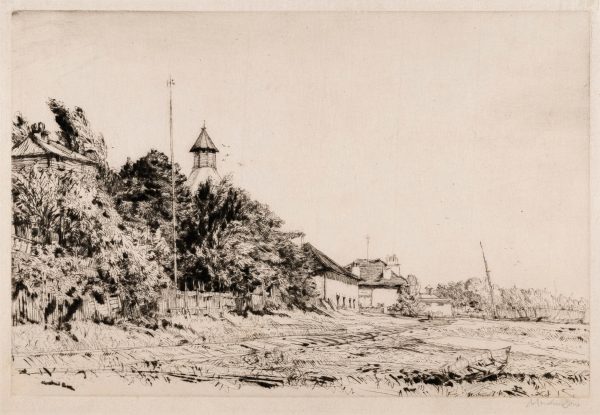
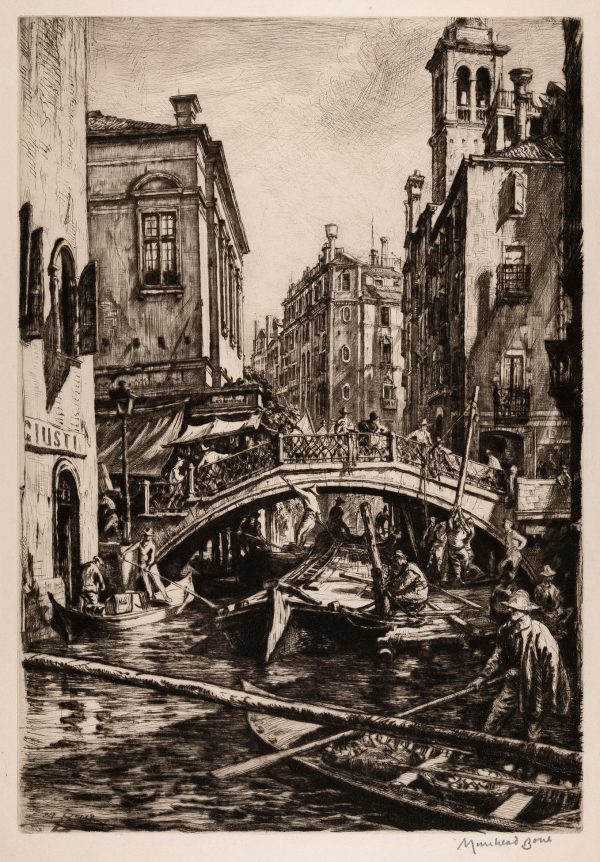
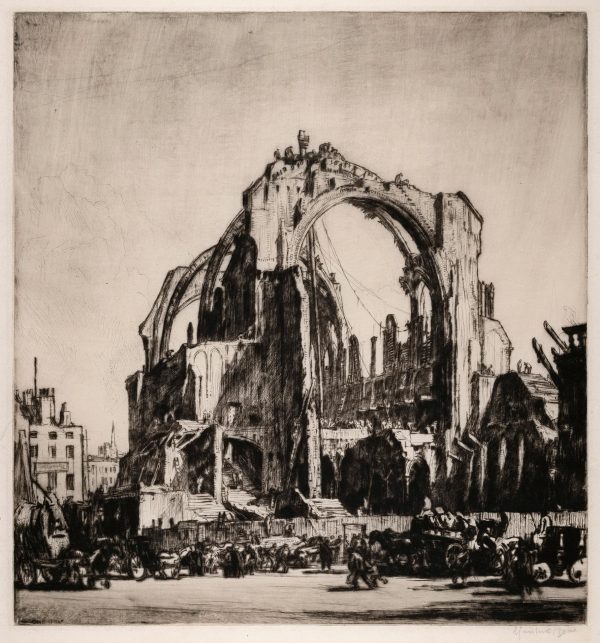
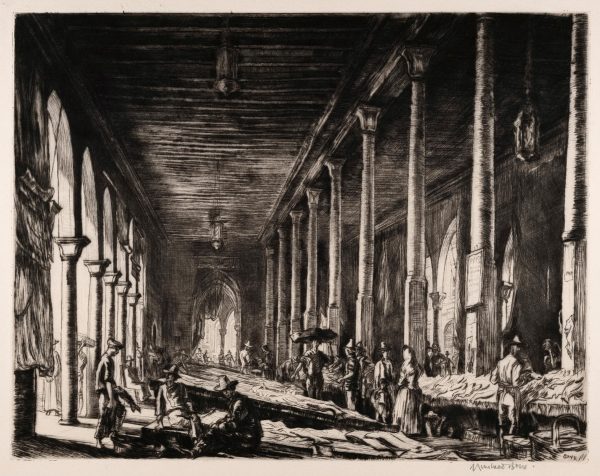
Bone’s early etchings often featured expansive, unworked areas of the plate (see Brewhouses, Southampton [CD.151], The Ballantrae Road [CD.212], Flood on Chiswick Mall [CD.237]). However, he would become best known for his heavily worked plates of architectural subjects (see Canal Bridge of SS Apostoli, Venice [CD.351], Demolition of St. James’s Hall, Exterior [CD.207], The Fishmarket, Venice [CD.344], Windy Night, Stockholm [CD.457]). He was noted, sometimes notoriously, for producing numerous states of each print, which collectors eagerly sought as they were released.
After the outbreak of WWI, he championed the creation of the Official War Artists programme and became Britain’s first official war artist, visiting the Western Front in 1916 and documenting the Battle of the Somme. He would later return to England and produce six lithographs of shipyards on the Clyde for the War Propaganda Bureau’s, Efforts and Ideals (see our exhibition, The Great War: Britain’s Efforts and Ideals), before returning to the Western Front once more in 1917. Knighted in 1937 for services to the Arts, Bone would go on to sit on the War Artists’ Advisory Committee whilst also working as an official War Artist during the Second World War producing large scale drawings of London during the Blitz and of the Home Front.
Sir Muirhead Bone has become synonymous with the British Print Revival, influencing a generation of artists including F. L. M. Griggs, Malcolm Osborne, James McBey, and Joseph Pennell to name but a few.
Henry Louch, May 2025
These works are all sold in acid free museum mounts.
‘CD’ Nos. refer to Campbell Dodgson’s, ‘Etchings and Drypoints by Muirhead Bone: A Catalogue‘ and ‘Continuation of Etchings & Drypoints by Muirhead Bone: A Catalogue‘.
-
Bone R.W.S. N.E.A.C., Sir Muirhead (1876 – 1956)
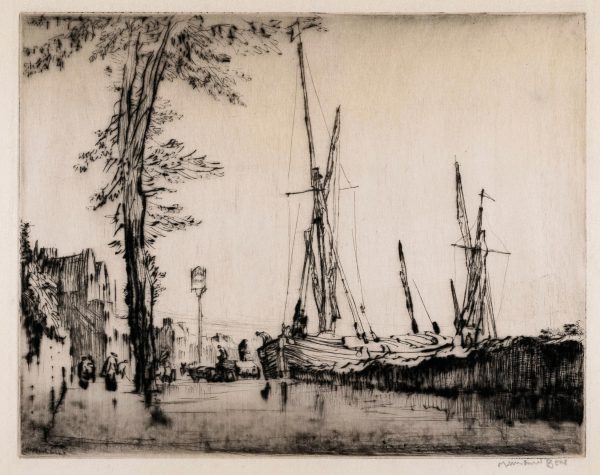
‘Brewhouses, Southampton’ (CD.151).
Drypoint etching. 1904. Signed. The only published state.
6×9 inches.
£175
Sold
-
Bone R.W.S. N.E.A.C., Sir Muirhead (1876 – 1956)
‘Canal Bridge of SS Apostoli, Venice’ (CD.351).
Drypoint. Signed. 1916-1926. Twentieth state, twenty-eight impressions printed. 129 impressions total across twenty-six states.
13×9 inches.
£1,500
Sold
-
Bone R.W.S. N.E.A.C., Sir Muirhead (1876 – 1956)
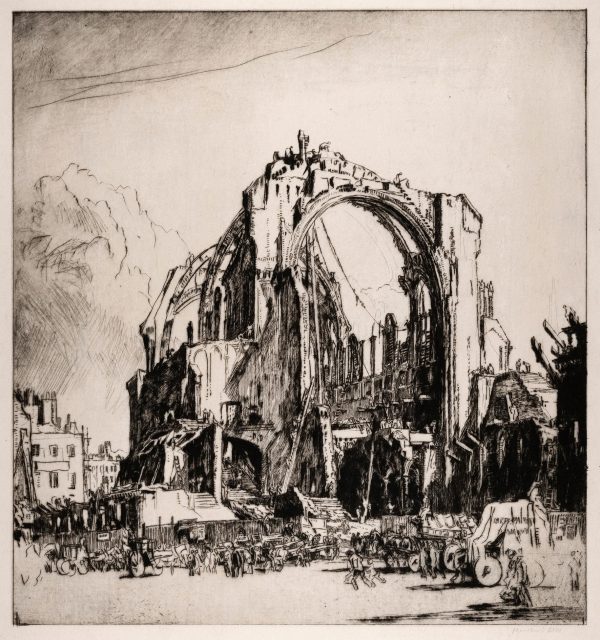
‘Demolition of St. James’s Hall’ (CD.207).
Drypoint. 1907. Signed. The first of four trial proofs, one impression. 62 impressions total across four states and four trial proofs.
11.75×10.75 inches.
£1,500
Sold
-
Bone R.W.S. N.E.A.C., Sir Muirhead (1876 – 1956)
‘Demolition of St. James’s Hall, Exterior’ (CD.207).
Drypoint etching. 1907. Signed. Second state, two impressions. 62 impressions total across four states and four trial proofs.
11.75×10.75 inches.
£1,750
-
Bone R.W.S. N.E.A.C., Sir Muirhead (1876 – 1956)
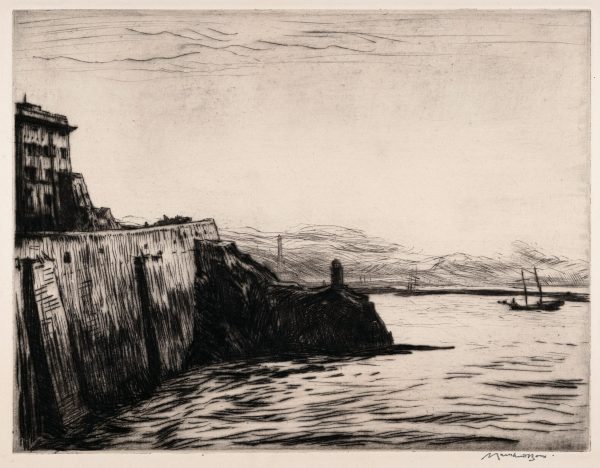
‘Evening, Port of Genoa’ (CD.337).
Drypoint. 1915. Signed. First state, twenty-four impressions. 45 impressions total across five states.
7.75×9.75 inches.
£375
-
Bone R.W.S. N.E.A.C., Sir Muirhead (1876 – 1956)
‘Flood on Chiswick Mall’ (CD.237).
Drypoint. Signed. 1908. Fourth state, thirty-six impressions. 46 impressions total across two states and two trial proofs.
5×7 inches.
£375
Sold
-
Bone R.W.S. N.E.A.C., Sir Muirhead (1876 – 1956)
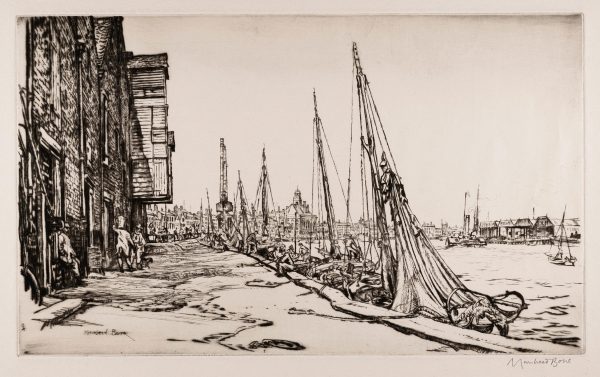
‘Shrimp Boats, Great Yarmouth’ (CD.464).
Drypoint. 1935. Signed. Third state, four impressions printed. 92 impressions total across nine states.
7.25×11.75 inches.
£675
-
Bone R.W.S. N.E.A.C., Sir Muirhead (1876 – 1956)
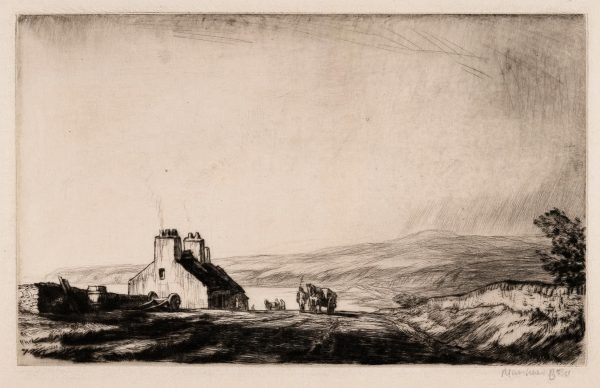
‘The Ballantrae Road’ (CD.212).
Drypoint. 1907. Signed. Fifth state, three impressions printed. 69 impressions total across fifteen states.
5×8 inches.
£225
Sold
-
Bone R.W.S. N.E.A.C., Sir Muirhead (1876 – 1956)
‘The Fishmarket, Venice’ (CD.344).
Drypoint. 1915. Signed. Twelfth state, twenty impressions printed. 61 impressions total across twelve states and one trial proof.
9×11.5 inches.
£1,750
Sold
-
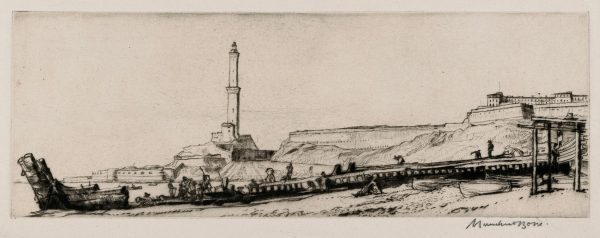
Bone R.W.S. N.E.A.C., Sir Muirhead (1876 – 1956)
‘The Lanterna, Genoa’ (CD.294).
Drypoint. 1912. Signed. Fourth state, nine impressions printed. 24 impressions total across six states.
3.5×9 inches.
£225
-
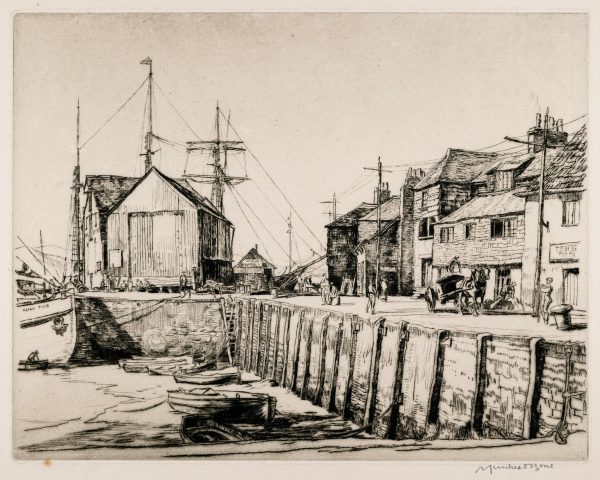
Bone R.W.S. N.E.A.C., Sir Muirhead (1876 – 1956)
‘The Mystery Ship, Padstow’ (CD.361).
Drypoint. 1919. Signed. Third state, 35 impressions printed. 43 impressions total across three states.
7×9 inches.
£375
Sold
-
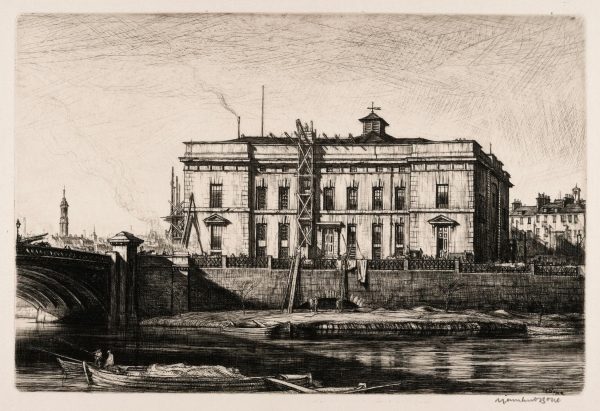
Bone R.W.S. N.E.A.C., Sir Muirhead (1876 – 1956)
‘The Old Justiciary Courthouse, Glasgow’ (CD.272).
Drypoint and etching. 1911. Signed. First state, 112 impressions printed. 123 impressions total across one state and six trial proofs.
5.5×7.75 inches.
£375
-
Bone R.W.S. N.E.A.C., Sir Muirhead (1876 – 1956)
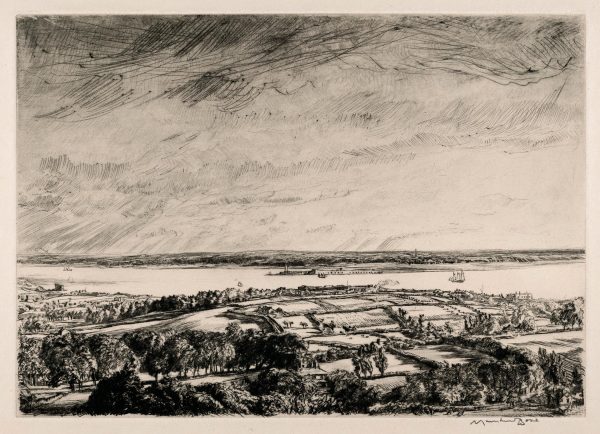
‘The Solent’ (CD.374).
Drypoint. 1920. Signed. Seventh state, two impressions printed. 94 impressions total across fourteen states.
7×9.75 inches.
£750
Sold
-
Bone R.W.S. N.E.A.C., Sir Muirhead (1876 – 1956)
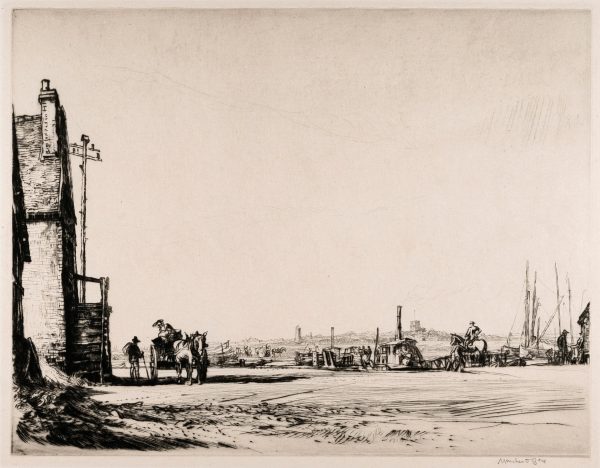
‘Walberswick Ferry’ (CD.305).
Drypoint. 1913. Signed. Tenth state, twenty-seven impressions printed. 70 impressions in total across ten states.
7.75×9.75 inches.
£575
Sold
-
Bone R.W.S. N.E.A.C., Sir Muirhead (1876 – 1956)
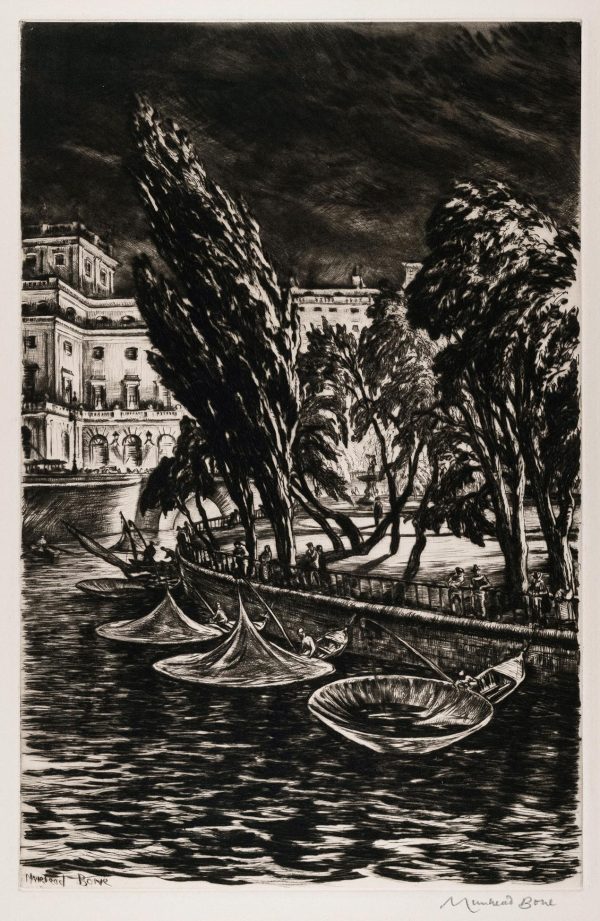
‘Windy Night, Stockholm’ (CD.457).
Drypoint. 1935. Signed. Tenth State, eighty impressions printed. 93 impressions in total across ten states.
12×7.5 inches.
£875
Sold