STANLEY ANDERSON
C.B.E. R.A. R.E. (1884-1966)
COUNTRY CRAFTS
Their fine tradition is fast dying out to give place to mass-production, uniformity and utter vulgarity. … It is very sad to note in almost every case that the old fellow is the last of the line as his sons hurry to nearby towns to gain a higher wage and baleful excitements. (Stanley Anderson)
Anderson was considered one of the great printmakers of his age. And despite being passionately against fashionable Movements in art, he is considered an important figure in what we now call the Print Revival. Every one of the 260 or so prints he made (not to mention the many watercolours and paintings) are distinguished by a combination of sensitivity for his subjects and remarkable technical skill.
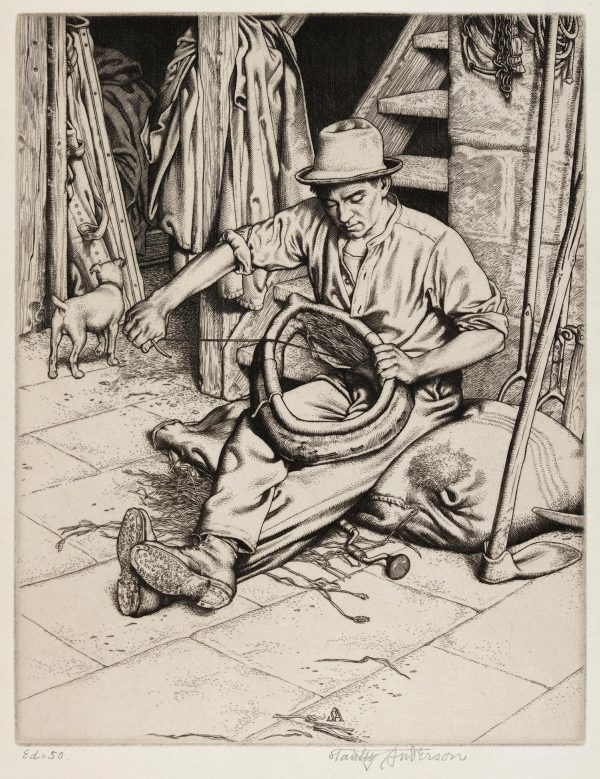
The series of prints depicting Country Crafts are the works for which Anderson is best known, and resulted in him being awarded a CBE in 1951. He began making them in 1933 (See ‘The Farm Hand’ below) when he moved from London to the Cotswolds. They are a distillation of his love of countryside life and his belief that modernity was unthinkingly bulldozing many of our traditions to the detriment of the physical and spiritual health of the country.
‘Country Crafts’ is something of a misleading title. Many of Anderson’s prints that fall formally or informally under that banner depict what might be considered unskilled, manual labour. But as Robert Meyrick and Harry Heuser note in their wonderful catalogue raisonne of Anderson’s work (RA, 2015) …
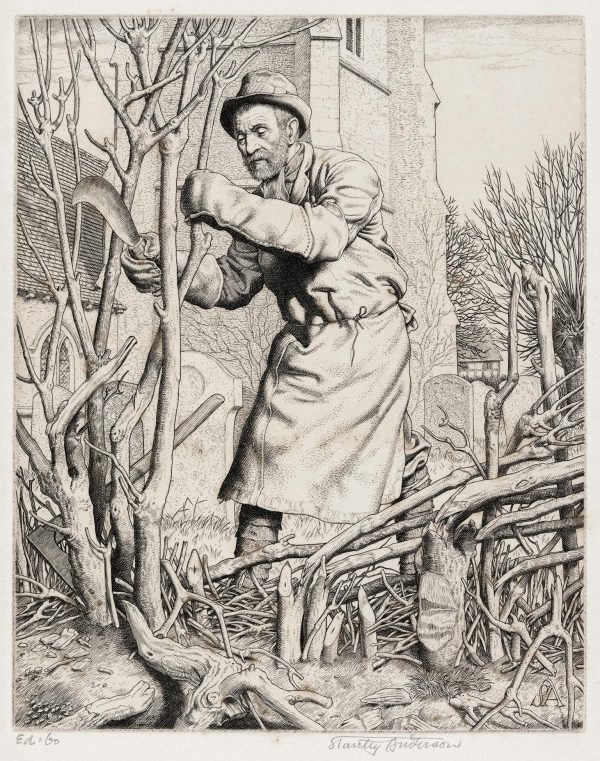
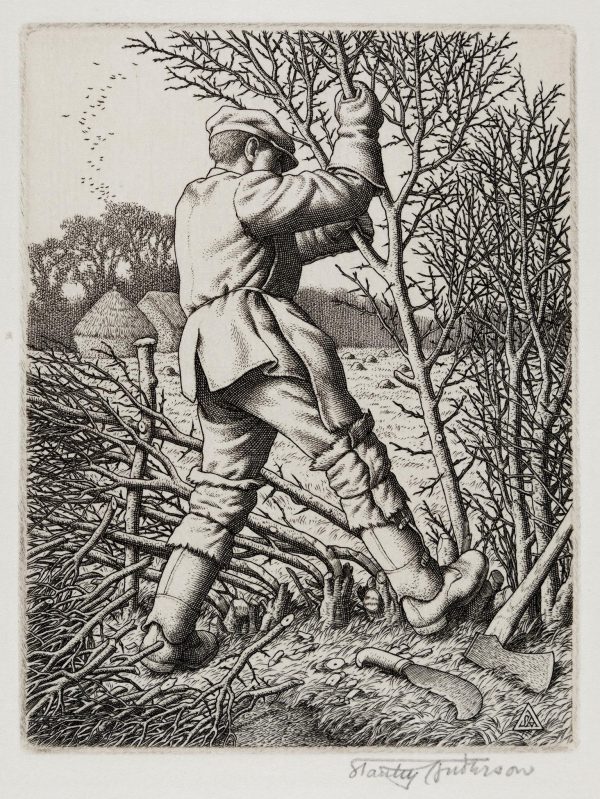
‘To Anderson, even seemingly unskilled work such as the ‘hacking and slashing’ of hedges was informed by the ‘wisdom and knowledge’ of centuries that was guiding the hand and mind of the labourer, the ‘knowledge handed on through generations directing the axe and billhook in every circumstance’ (Meyrick and Heuser, p.25).
Anderson was apprenticed to his father, a metal craftsman specialising in engraved heraldic ornamentation, before studying at the Bristol Municipal School of Art and the Royal College of Art, London. Until the late 1920s he worked mostly in etching, after which he gradually turned to engraving. By the mid 1930s he was working exclusively in that most unforgiving medium; ‘You can’t hide poor draughtsmanship under a convenient tone of ink or foul biting’ he wrote (Meyrick and Heuser, p.23). It is the combination of Anderson’s own extraordinary craftsmanship and his working subjects that give these prints so much of their power.
This group of prints follows on from the group by Charles Tunnicliffe (CLICK HERE) and come from the same private collection.
As with Tunnicliffe, any student or enthusiast of Anderson’s prints is blessed to have Robert Meyrick and Harry Heuser’s excellent book Stanley Anderson Prints: A Catalogue Raisonne (Royal Academy, 2015). We are indebted to it for all the information on this page.
-
Anderson C.B.E. R.A. R.E., Stanley (1884 – 1966)
‘The Farm Hand’ (MH205).
Engraving. 1933. Signed. Monogrammed in plate. Edition of 50.
7.5×5.75 inches.
Framed: 15.5×13 inches.
£1,250
Sold
-
Anderson C.B.E. R.A. R.E., Stanley (1884 – 1966)
‘The Hedger’ (MH210).
Engraving. 1934. Signed. Monogrammed in plate. Edition of 60.
7.5×6 inches.
£675
Sold
-
Anderson C.B.E. R.A. R.E., Stanley (1884 – 1966)
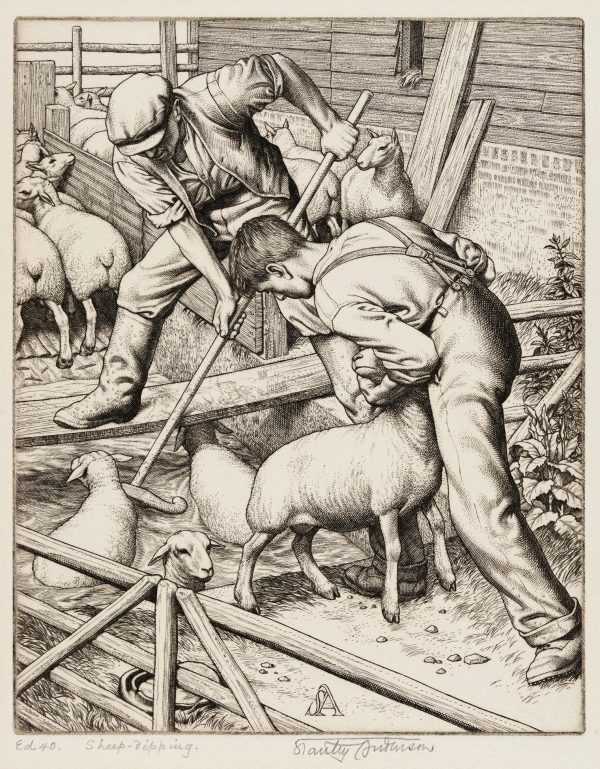
‘Sheep Dipping’ (MH213).
Engraving. 1935. Signed. Monogrammed in plate. Edition of 40.
6.75×5.25 inches.
£750
Sold
-
Anderson C.B.E. R.A. R.E., Stanley (1884 – 1966)
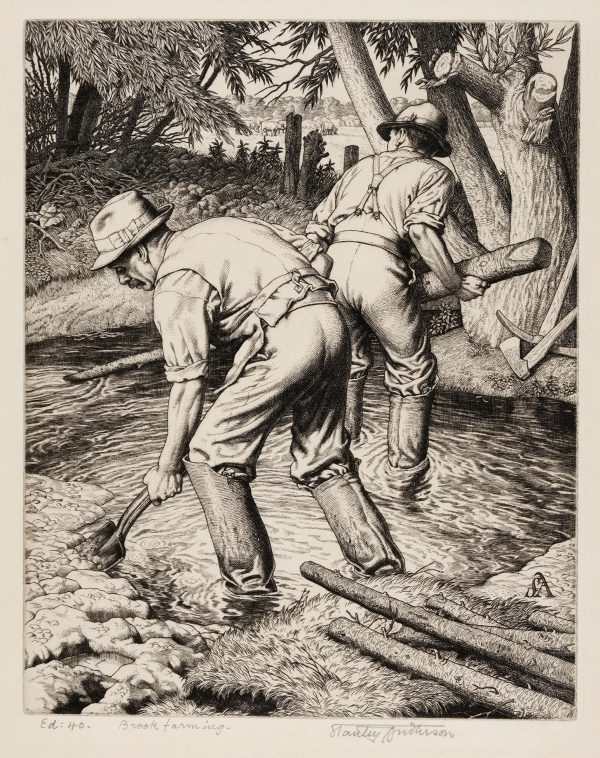
‘Brook Farming’ (MH216).
Engraving. 1936. Signed. Monogrammed in plate. Edition of 40.
7.5×6 inches.
£875
Sold
-
Anderson C.B.E. R.A. R.E., Stanley (1884 – 1966)
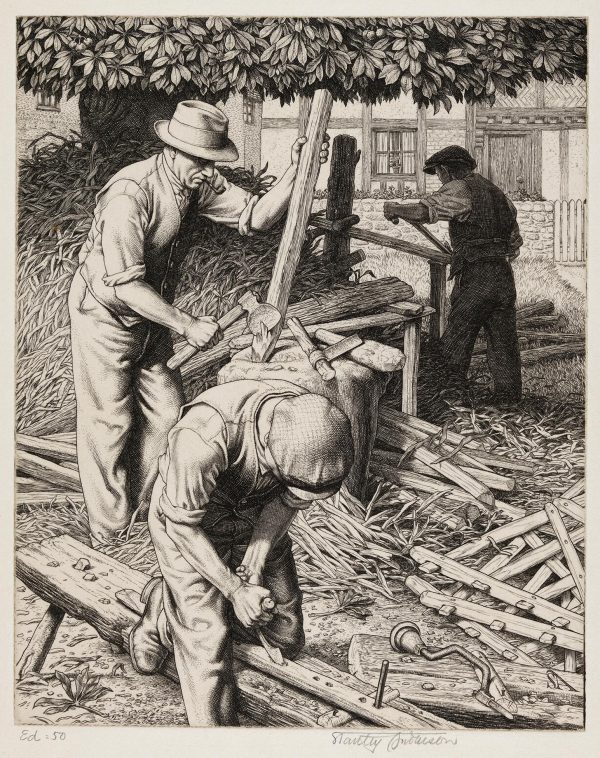
‘Hurdlemakers’ (MH218).
Engraving. 1937. Signed. Monogrammed in plate. Edition of 50.
7.5×6 inches.
£1,250
-
Anderson C.B.E. R.A. R.E., Stanley (1884 – 1966)
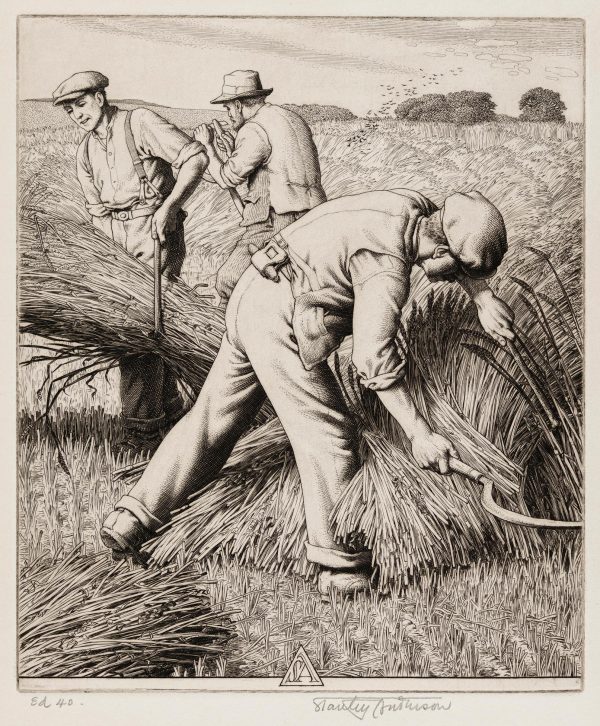
‘Windswept Corn’ (MH221).
Engraving. 1938. Signed. Monogrammed in plate. Edition of 40.
6×5.25 inches.
£875
Sold
-
Anderson C.B.E. R.A. R.E., Stanley (1884 – 1966)
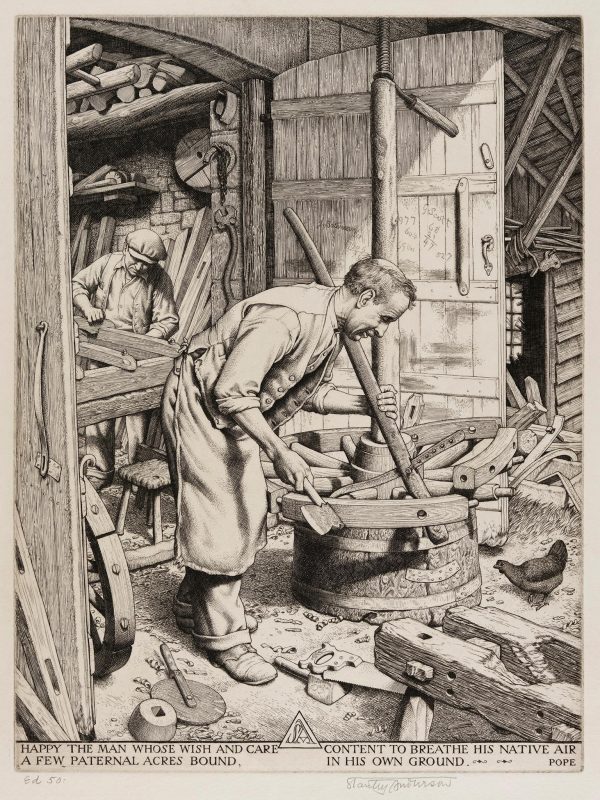
‘The Wheelwright’ (MH224).
Engraving. 1939. Signed. Monogrammed in plate. Edition of 50.
8.5×6.25 inches.
£1,250
-
Anderson C.B.E. R.A. R.E., Stanley (1884 – 1966)
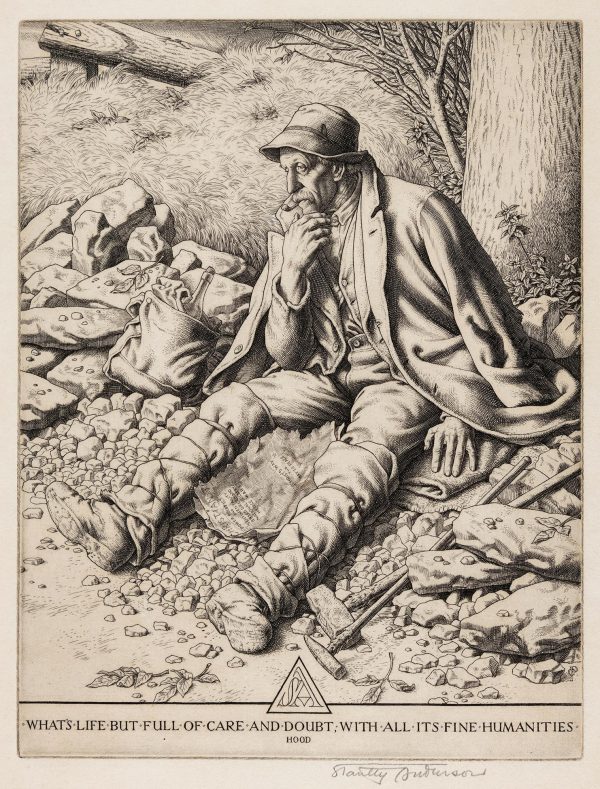
‘The Stonebreaker’ (MH226).
Engraving. 1940. Signed. Monogrammed in plate. Edition of 109.
7.25×5.5 inches.
£675
Sold
-
Anderson C.B.E. R.A. R.E., Stanley (1884 – 1966)
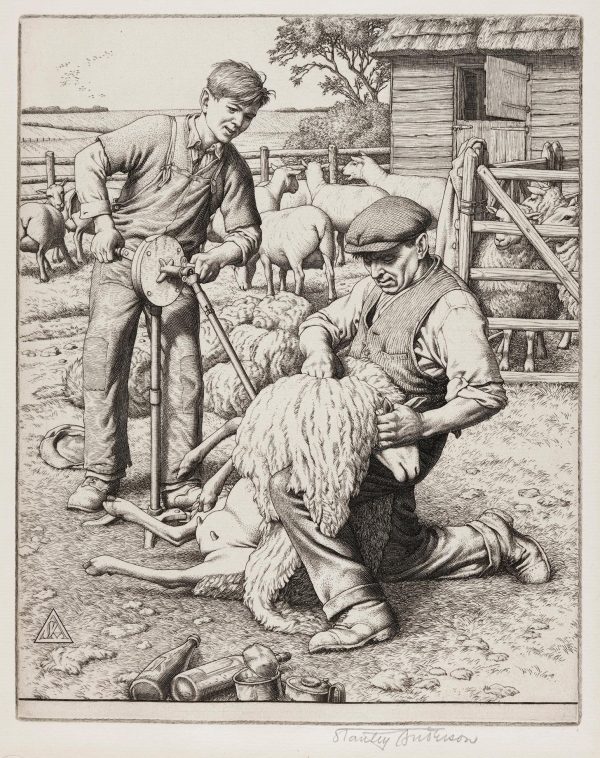
‘Sheep Shearing’ (MH233).
Engraving. 1941. Signed. Monogrammed in plate. Edition of 350.
7.5×6 inches.
£750
-
Anderson C.B.E. R.A. R.E., Stanley (1884 – 1966)
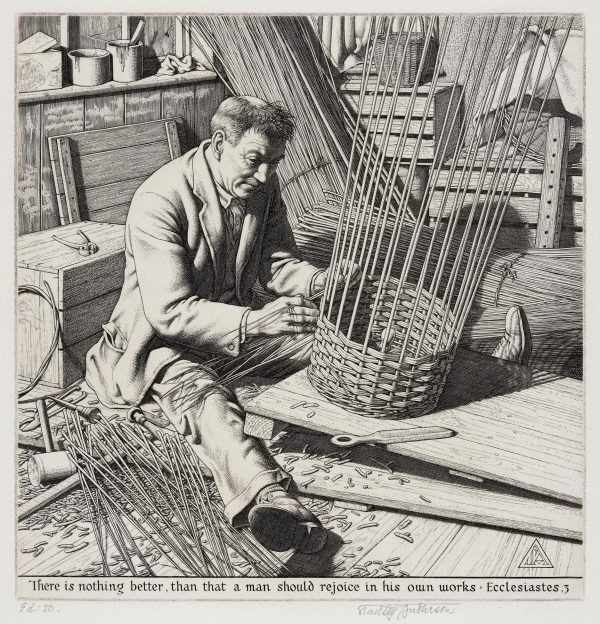
‘The Basket Maker’ (MH234).
Engraving. 1942. Signed. Monogrammed in plate. Edition of 50.
6.75×6.5 inches.
£1,250
Sold
-
Anderson C.B.E. R.A. R.E., Stanley (1884 – 1966)
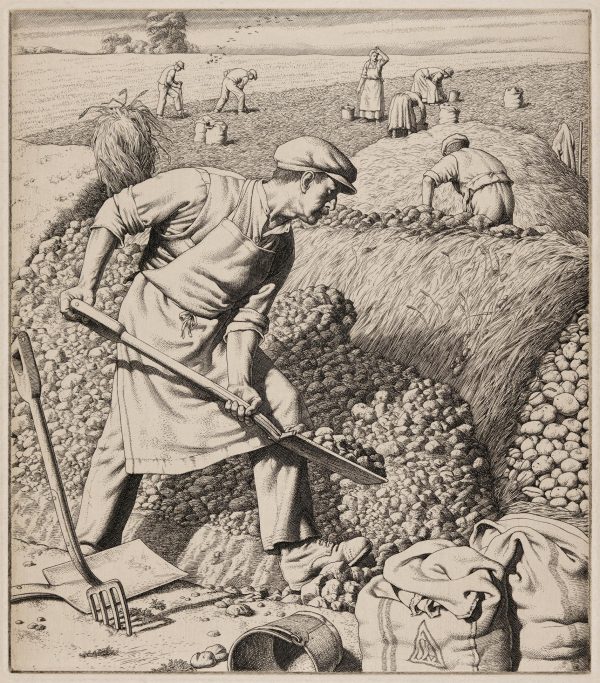
‘Clamping Spuds’ (MH235).
Engraving. 1942. Monogrammed in plate. Unsigned impression outside the edition of 50.
7.5×6.5 inches.
£475
Sold
-
Anderson C.B.E. R.A. R.E., Stanley (1884 – 1966)
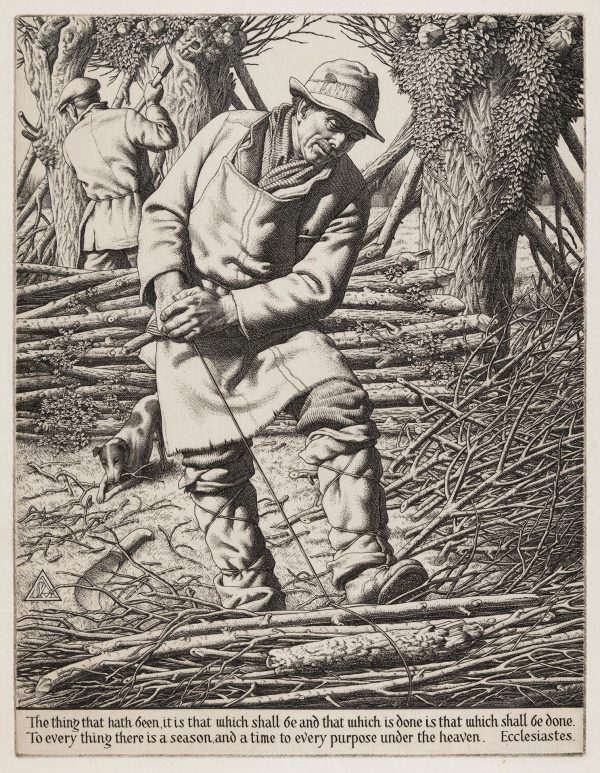
‘Trimming and Faggoting’ (MH238).
Engraving. 1943. Monogrammed in plate. Unsigned impression outside the edition of 50.
7.5×5.75 inches.
£475
Sold
-
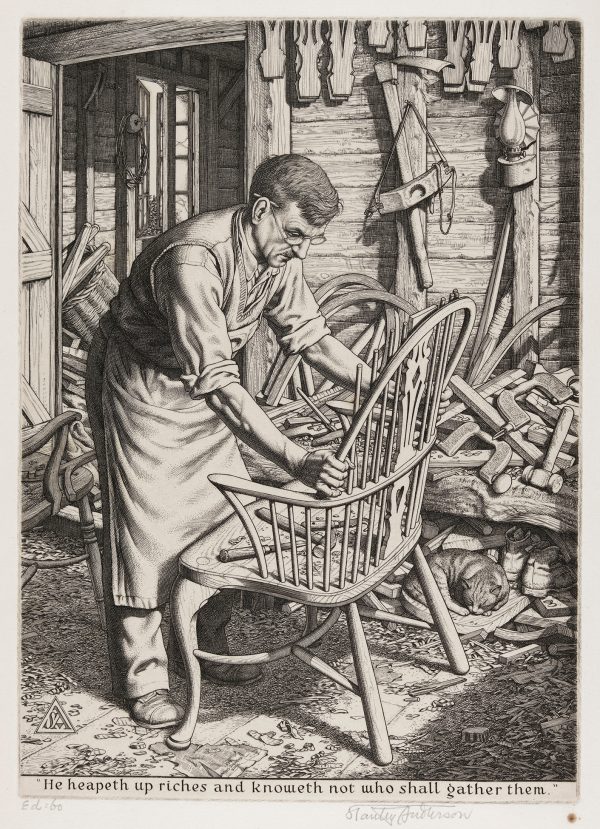
Anderson C.B.E. R.A. R.E., Stanley (1884 – 1966)
‘The Chair Maker’ (MH241).
Engraving. 1944. Signed. Monogrammed in plate. Edition of 60.
8.5×6 inches.
Framed: 16.5×13.25 inches.
£1,100
Sold
-
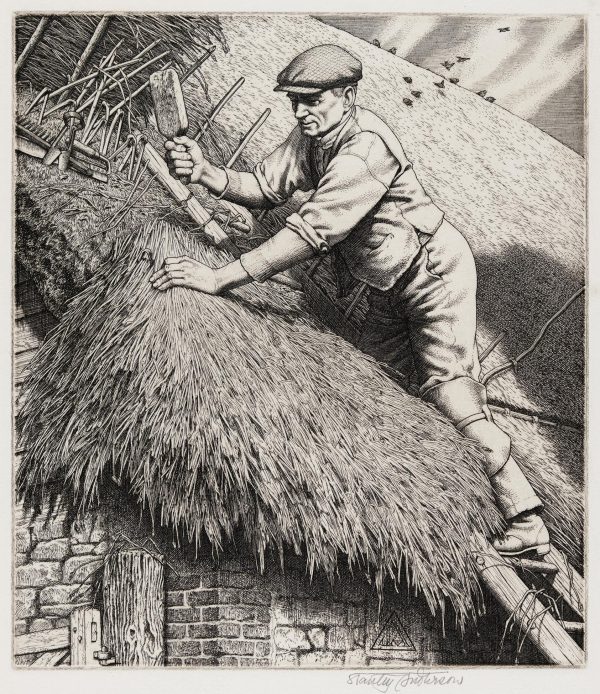
Anderson C.B.E. R.A. R.E., Stanley (1884 – 1966)
‘The Thatcher’ (MH242).
Engraving. 1944. Signed. Monogrammed in plate. Edition of 60.
6.5×5.5 inches.
£1,250
Sold
-
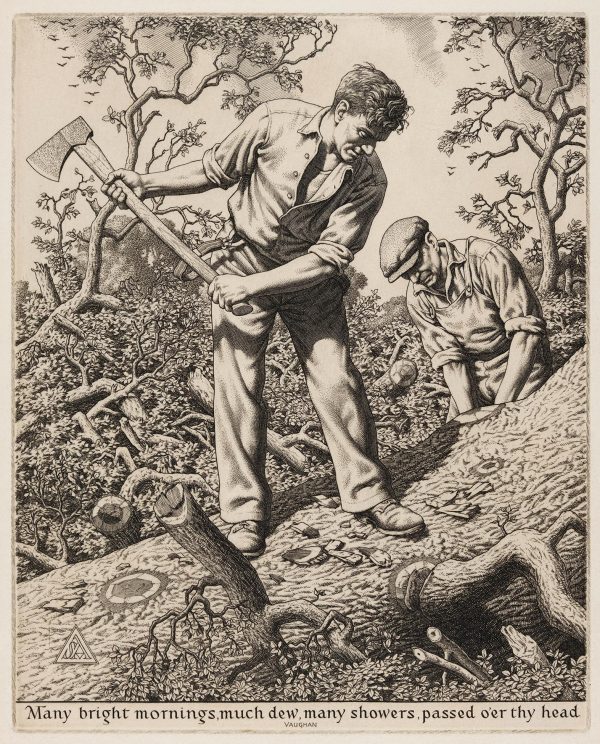
Anderson C.B.E. R.A. R.E., Stanley (1884 – 1966)
‘Tree Fellers’ (MH245).
Engraving. 1945. Monogrammed in plate. Unsigned impression outside the edition of 75.
7.5×6 inches.
£475
Sold
-
Anderson C.B.E. R.A. R.E., Stanley (1884 – 1966)
‘Hedgelaying’ (MH246).
Engraving. 1945. Signed. Editioned ’11/12 on old paper’ under the mount. Monogrammed in plate. Edition of 260 with a further 12 on antique paper.
4×3 inches.
£675
Sold
-
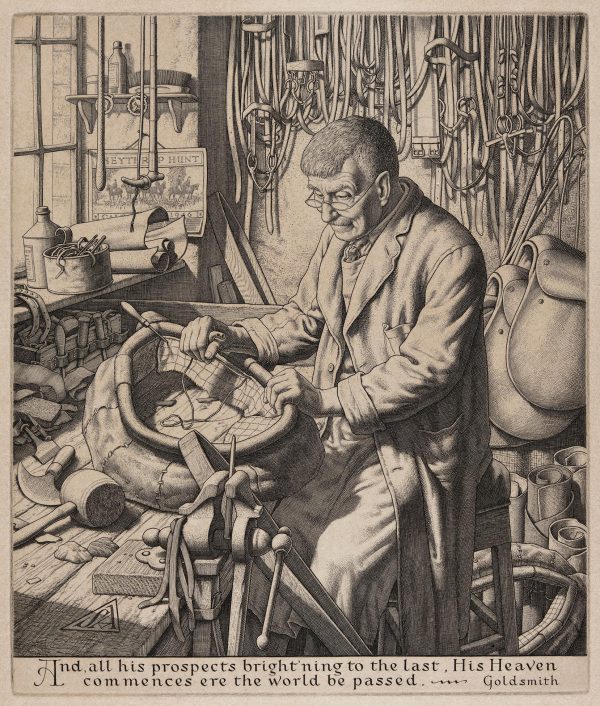
Anderson C.B.E. R.A. R.E., Stanley (1884 – 1966)
‘The Saddler’ (MH248).
Engraving. 1946. Monogrammed in plate. Unsigned impression outside the edition of 65.
7.5×7 inches.
£475
Sold
-
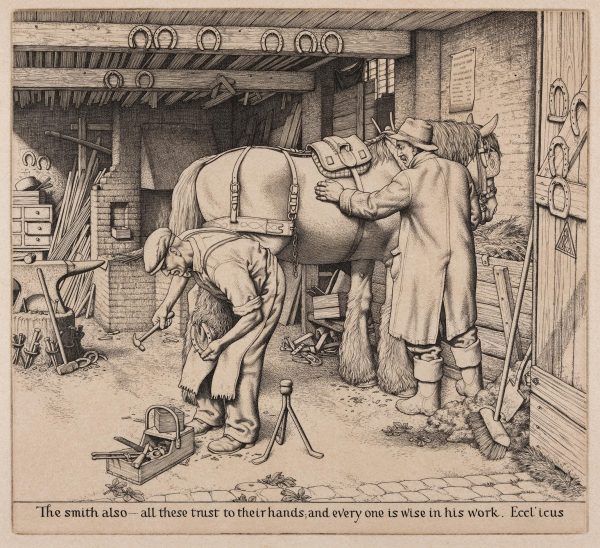
Anderson C.B.E. R.A. R.E., Stanley (1884 – 1966)
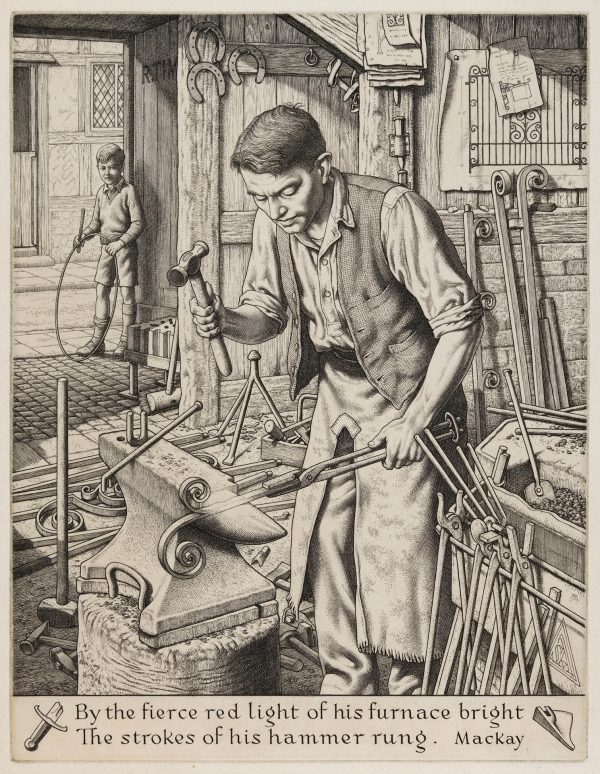
‘The Smith’ (MH249).
Engraving. 1946. Monogrammed in plate. Unsigned impression outside the edition of 65.
7×7.75 inches.
£575
-
Anderson C.B.E. R.A. R.E., Stanley (1884 – 1966)
‘Hyden, The Old Shepherd’ (MH251).
Engraving. 1947. Signed. Monogrammed in plate. Edition of 65.
7×5.75 inches.
£875
-
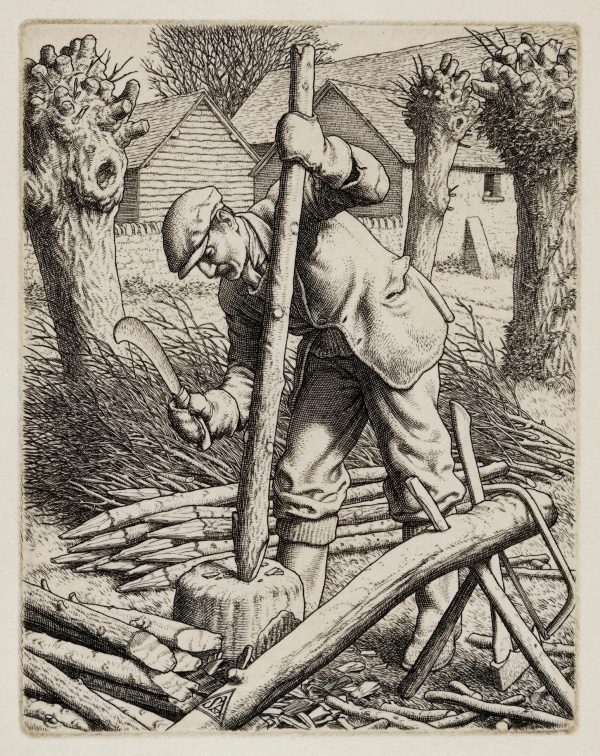
Anderson C.B.E. R.A. R.E., Stanley (1884 – 1966)
‘Trimming Stakes’ (MH252).
Engraving. 1947. Monogrammed in plate. Unsigned impression outside the edition of 50.
3.74×3 inches.
£375
Sold
-
Anderson C.B.E. R.A. R.E., Stanley (1884 – 1966)
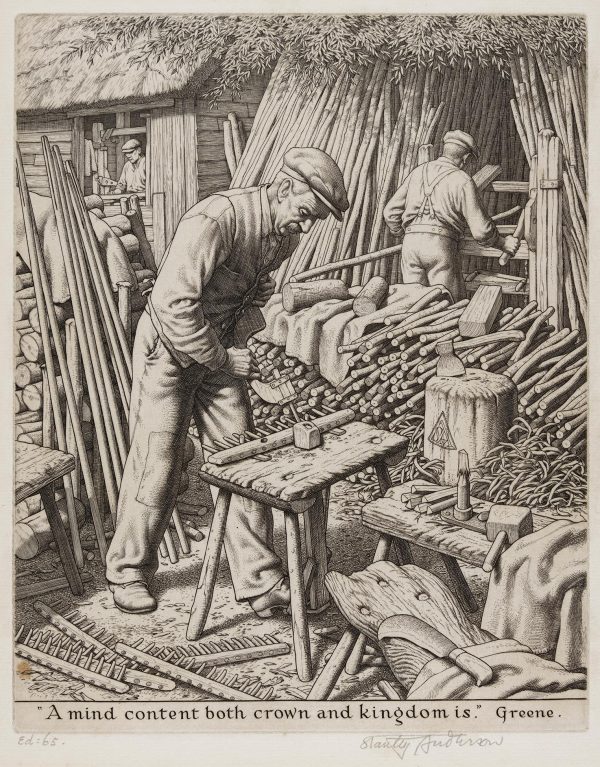
‘The Rake Makers’ (MH253).
Engraving. 1948. Signed. Monogrammed in plate. Edition of 65.
7.5×5.75 inches.
£975
Sold
-
Anderson C.B.E. R.A. R.E., Stanley (1884 – 1966)
‘Making the Gate’ (MH255).
Engraving. 1949. Monogrammed in plate. Unsigned impression outside the edition of 70.
7.25×6 inches.
£475
Sold
-
Anderson C.B.E. R.A. R.E., Stanley (1884 – 1966)
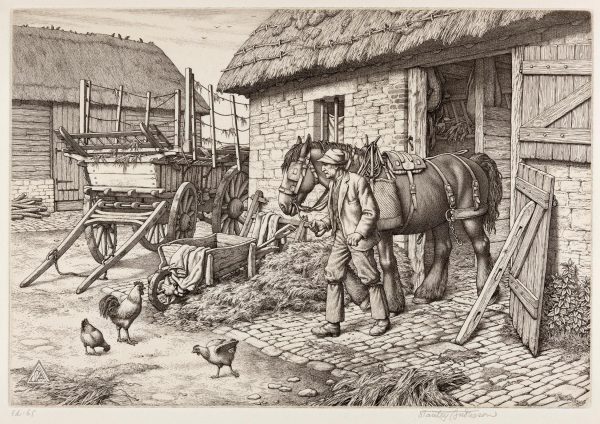
‘Good Companions’ (MH258).
Engraving. 1951. Signed. Monogrammed in plate. Edition of 65.
7×10.5 inches.
£750
Sold