
PALMER | SUTHERLAND
A special exhibition of thirty-five etchings by
Samuel Palmer (1805-1881)
and
Graham Sutherland (1903-1980)
EXHIBITION DATES
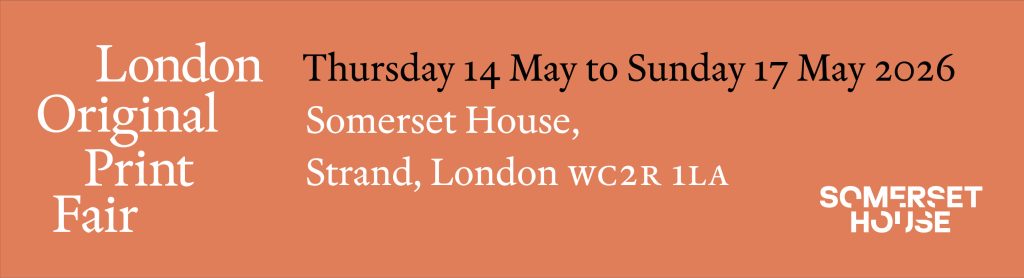
Thursday 14th – Sunday 17th May
at the London Original Print Fair
Contact the gallery for complimentary tickets.
Tom Edwards will be In Conversation with Gordon Cooke, Jolyon Drury and Kit Boyd at the Fair on Thursday 14th May.
CLICK HERE to book tickets to hear them discuss this exhibition.
THE EXHIBITION WILL CONTINUE
at 30 Museum Street, London WC1A 1LH
Tuesday 19th May – Tuesday 2nd June
Samuel Palmer’s (1805-1881) extraordinary vision of the English landscape is so familiar and casts such a long shadow over British creative culture that it is hard to imagine there was a time when his work was little-known. His reputation in his own lifetime was never great and despite the substantial efforts of his son, Alfred Herbert Palmer (1853-1932), it did not significatly grow in the years immediately following his death. The watershed moment was the Victoria and Albert Museum’s 1926 Exhibition of Drawings, Etchings & Woodcuts by Samuel Palmer and other Disciples of William Blake, the centenary of which our exhibition is timed to coincide with and celebrate. The V&A exhibition immediately re-established Palmer as one of Britain’s great imaginative artists. His early Shoreham period works in particular, which Victorian taste (and even his son!) had disregarded as mere youthful follies, were a revelation to the public and to artists. From relative obscurity, Palmer became the overriding influence on the group of young Modern British artists now known as the Neo-Romantics. Paul Nash (1889-1946), John Minton (1917-1957), John Piper CH (1903-1993), John Craxton (1922-2009), Keith Vaughan (1912-1977) and others all pursued a vision of landscape similar to Palmer’s in poetic intensity.
While the 1926 V&A exhibition was responsible for Palmer’s wider fame, there were a small number of people championing his work in the preceeding years. Martin Hardie (1875-1952) and Laurence Binyon (1869-1943), of the V&A and British Museum respectively, were academic enthusiasts who were instrumental in enabling the 1926 exhibition. Artists who appreciated Palmer’s work included Hardie, himself a printmaker as well as curator, Sir Frank Short R.A. P.R.E. (1857-1945) and F L Griggs R.A. R.E. (1876-1938). However, the most significant pre-1926 rediscovery of Palmer was made by a group of young printmakers studying at Goldsmiths. Now often referred to as the ‘Class of ’21’, this group included Paul Drury (1903-1987), Graham Sutherland OM (1903-1980), Edward Bouverie Hoyton (1900-1988), Alexander Walker (1895-1984), William Larkins (1901-1974) and, later, Robin Tanner (1904-1988). The story as recorded by Sutherland is that, one day in 1924, Willie Larkins found an impression of Palmer’s The Herdsman’s Cottage in the Charing Cross Road and brought it to Goldsmiths. For these young artists, who had started their education firmly within the printmaking tradition established by J M Whistler (1834-1903) and Francis Seymour Haden (1818-1910), the Palmer print changed everything. Sparse, linear work was abandoned and henceforth they were interested only in heavily working their etching plates in an attempt to produce the luminosity that Palmer had acheived.
No claim can be made that Graham Sutherland has been forgotten or neglected like Palmer was. However, his early prints are certainly under-appreciated. It often requires pointing out that in the middle part of the twentieth century Sutherland was considered Britain’s greatest living painter – more so than Francis Bacon (1909-1992), with whom he worked closely in the ’40s, or Freud (1922-2011), who he mentored. Sutherland’s reputation was almost entirely based on his paintings of the late 1930s to 1960s, but, as we hope this exhibition shows, taken together the early prints should be considered one of his crowning acheivements.
This exhibition features all bar one of Palmer’s prints, alongside the largest group of Sutherlands early prints that has been put together for sale since Gordon Cooke’s important exhibition Graham Sutherland – Early Etchings of 1993. It offers a rare opportunity to assess their work side by side and allows us to see, with unusual fullness, both the great quality of Palmer’s printmaking and the generative force it had on Sutherland. However, this is not intended solely as a demonstration of Palmer’s influence. At a moment in the early twentieth century, soon after WWI and the excitement of pre-war Modernist movements, when British artists were searching for forms of expression rooted in their native landscape, Palmer offered not just a model but a challenge: how to re-imagine his vision for the Modern world. Sutherland’s early prints show how powerfully he answered that challenge. Much like when Palmer’s work was rediscovered in 1926, we hope Sutherland’s early prints will be a revelation to those who did not see the last significant gathering of them, more than thirty years ago.
THE PRINTS
The etchings of Samuel Palmer and Graham Sutherland are descrete groups within each artists’ sprawling ouvre. This allows them to be considered as sets of work as well as in isolation. Palmer’s thirteen prints were made in the second half of his life, between 1850 and 1881, with four further plates being finished by his son after his death. In contrast, Sutherland’s forty or so etchings were made right at the beginning of his career, between 1922 and 1932 (two final etchings being made in 1938). That is, during and just after his time studying at Goldsmith’s. The strange consequence of this is that a number of the prints from these two remarkable and important bodies of work – one with a direct connection to Blake and the early nineteenth century Romantic movement, the other a high-point in the twentieth century revival of print-making and a segue to the great Neo-Romantic movement of the 1930s and 1940s – were made only 40 years apart!
All works will be published online to coincide with the Private View of the London Original Print Fair at 6pm on Wednesday 13th May.
Below are some examples of works that will be included


