HANS TISDALL (1910-1997)
An Exhibition of Paintings
1930s – 1960s
from the Artist’s Estate
PRIVATE VIEW: Thursday 1st October 6-8pm
The exhibition continues until Saturday 17th October
Hans Tisdall was born Hans John Knox Aufseeser in Munich in 1910. He was the younger of two sons, and both of his parents were artists. From 1928, he studied painting, sign-writing and craft skills at the Munich Academy of Fine Art and the Berlin Akademie. In 1929, he spent a year as an apprentice to the sculptor Moisey Kogan (1879-1943) in Paris and joined the artists’ colony at Ascona in Switzerland.
In 1930, Tisdall moved to London, ostensibly to work in an advertising agency. He lasted just three days before realising it did not suit him and left to be a full-time painter, designer and muralist. He took a studio at 6 Fitzroy Street, next door to the home of Duncan Grant with whom he became friendly. Although this brought Tisdall into close proximity with the Bloomsbury Group, he remained largely independent of them.
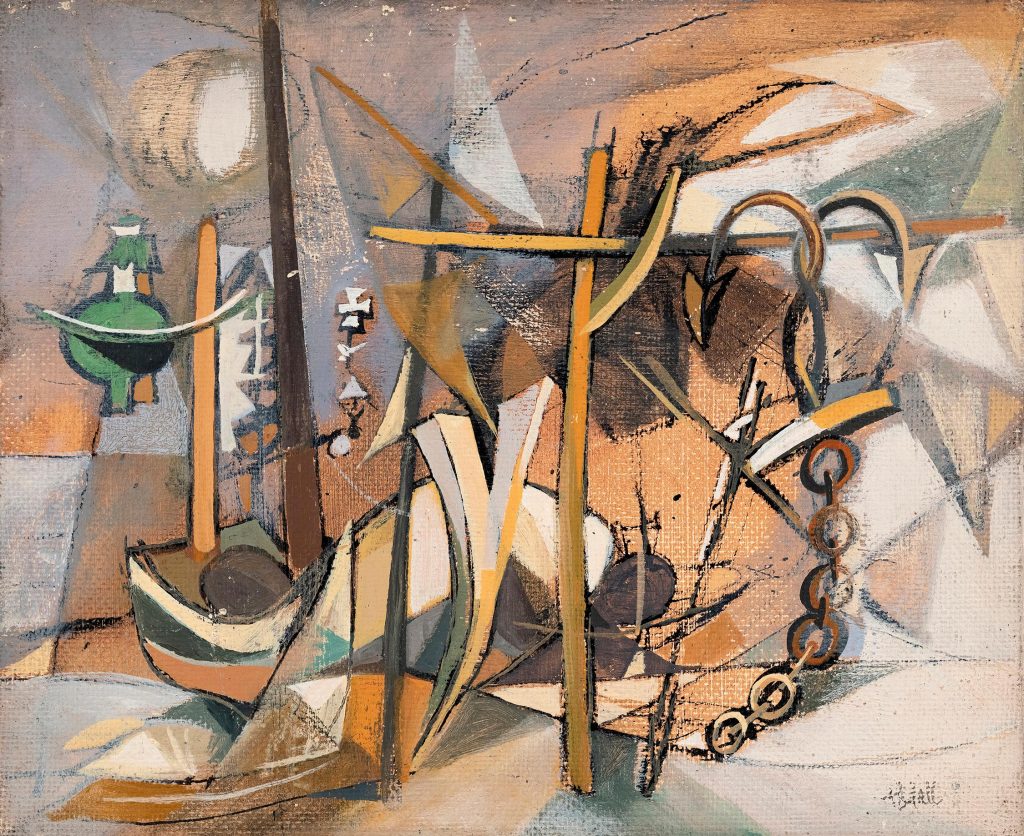
Tisdall particularly enjoyed painting marine subjects, including boats, sails and the shops of Hastings and spent much of his time travelling between the South Coast and London. Alongside his painting, Tisdall was remarkably multi-disciplinary. He established himself as a mural painter, making his first large scale piece for the University Settlement in Wapping in 1935, and in 1936 was awarded a Medal of Honour for his work on British Pavilion at the International Exhibition, Paris. His first commercial illustration was the dust jacket forThe Blue Bed, a collection of stories published by Jonathan Cape in 1937. He developed his own distinctive form of lettering (later to be turned into the typeface ‘Tisdall Script’ by Michael Harvey in 2001) and continued to design book jackets for Jonathan Cape and other publishers for more than 30 years. Tisdall also became well known as a textile designer. In 1940/1[1] he married Isabel Gallegos, the daughter of a Spanish painter who ran Edinburgh Weavers. He made many designs for Edinburgh Weavers and Tamesa Fabrics, the company Isabel subsequently founded in 1964.
During the War, as so many other émigrés did, Tisdall changed his name from Aufseeser to Tisdall (his mother’s maiden name) to avoid drawing attention to his German and Jewish heritage. In 1940, he joined the Civil Defence Corps and worked for the Ministry of Information contributing to a series of wartime adverts.
After the War, there was a growing demand for public art, and Tisdall began to take on increasingly ambitious projects. In 1951, he was commissioned to help design an entrance for the Battersea Pleasure Gardens as part of the Festival of Britain. He also painted a large mural for Plymouth Civic Centre, commissioned by Sir Geoffrey Jellicoe, and went on to design mosaics, tapestries and sculptures for universities, offices and municipal buildings.
Tisdall held his first one-man show at the Leger Galleries in 1945, and in 1947/48 became a lecturer in painting at the Central School of Arts and Crafts, a position he held until 1975. He continued to exhibit in Britain and Germany until his death in January 1997.
Solo Exhibitions:
- Leger Galleries, London, 1945, 1946
- Brighton Museum, 1947
- Galerie D’Orsay, Paris, 1954
- Galerie Vömel Düsseldorf, 1958, 1965, 1970, 1974, 1990, 2003 (group), 2007, 2013
- Hanover Gallery, London, 1961
- Plymouth Art Gallery, 1962
- International Tapestry Exhibition, New York, 1969
- ‘Art of the Letter’, Edinburgh, 1970
- Pride Gallery, London, 1988
- Albemarle Gallery, London ,1990
- Central St Martins, London, 2000 (group)
Tisdall’s work is in the British Museum, Tate Britain, the V&A , V&A East and the Manchester Art Gallery, amongst other major museums.
THE EXHIBITION
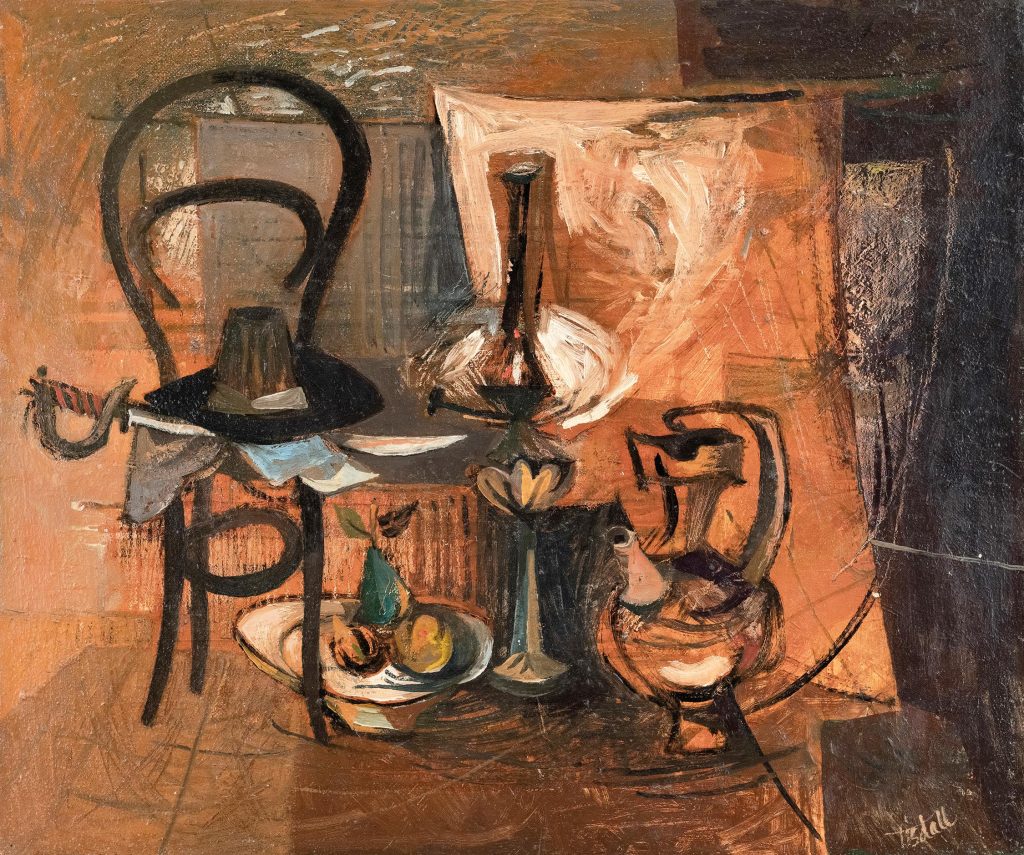
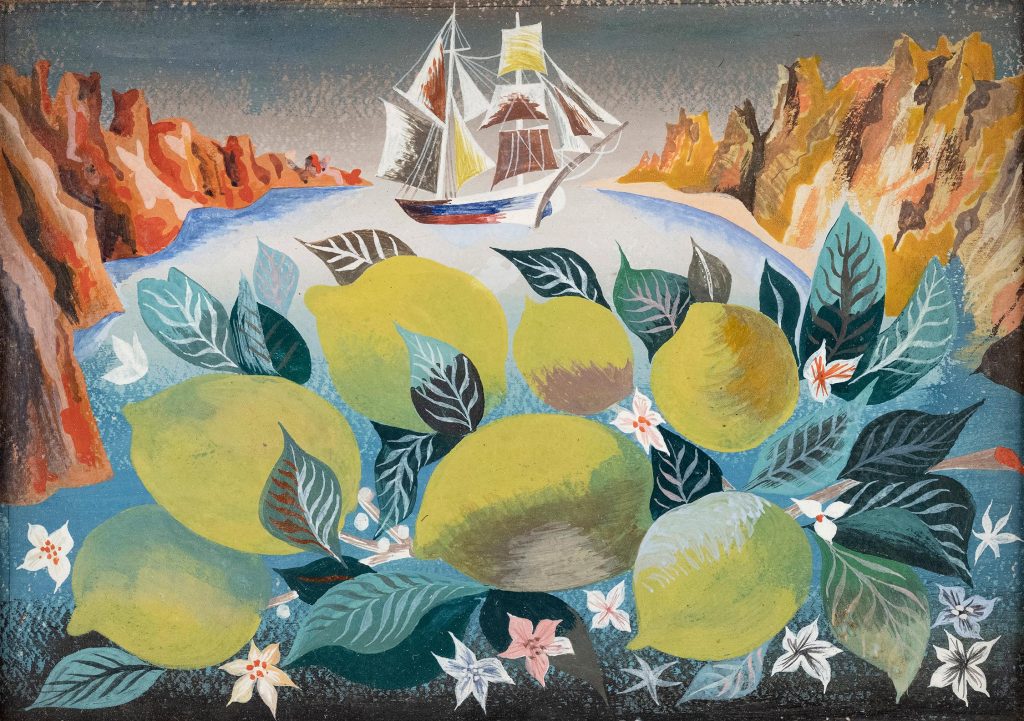
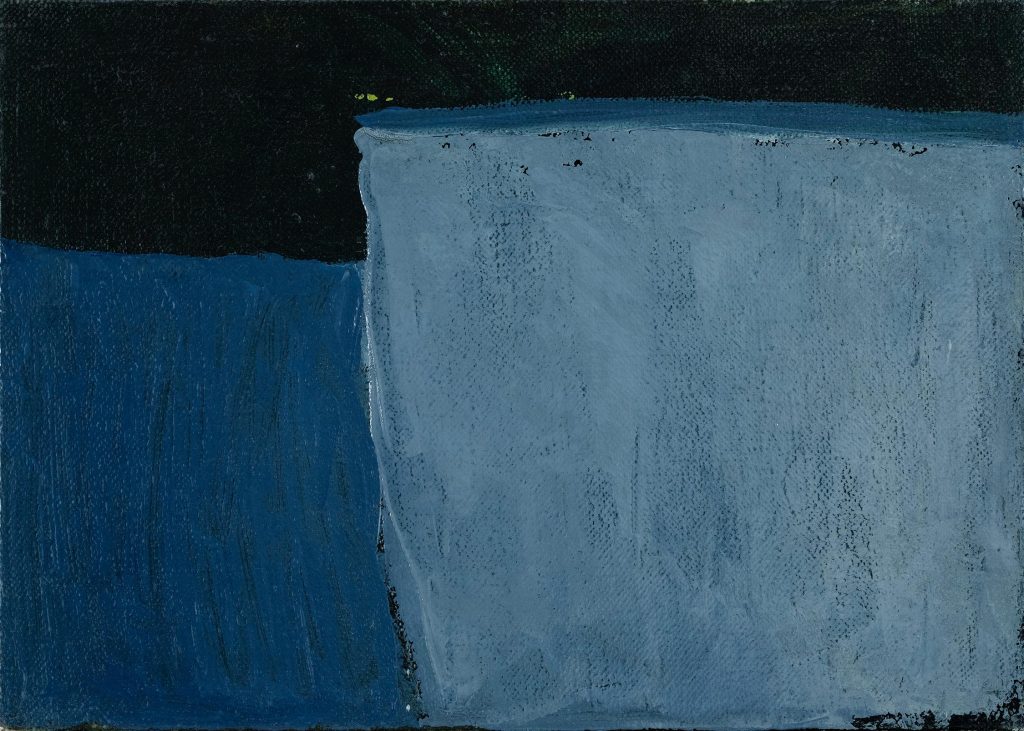
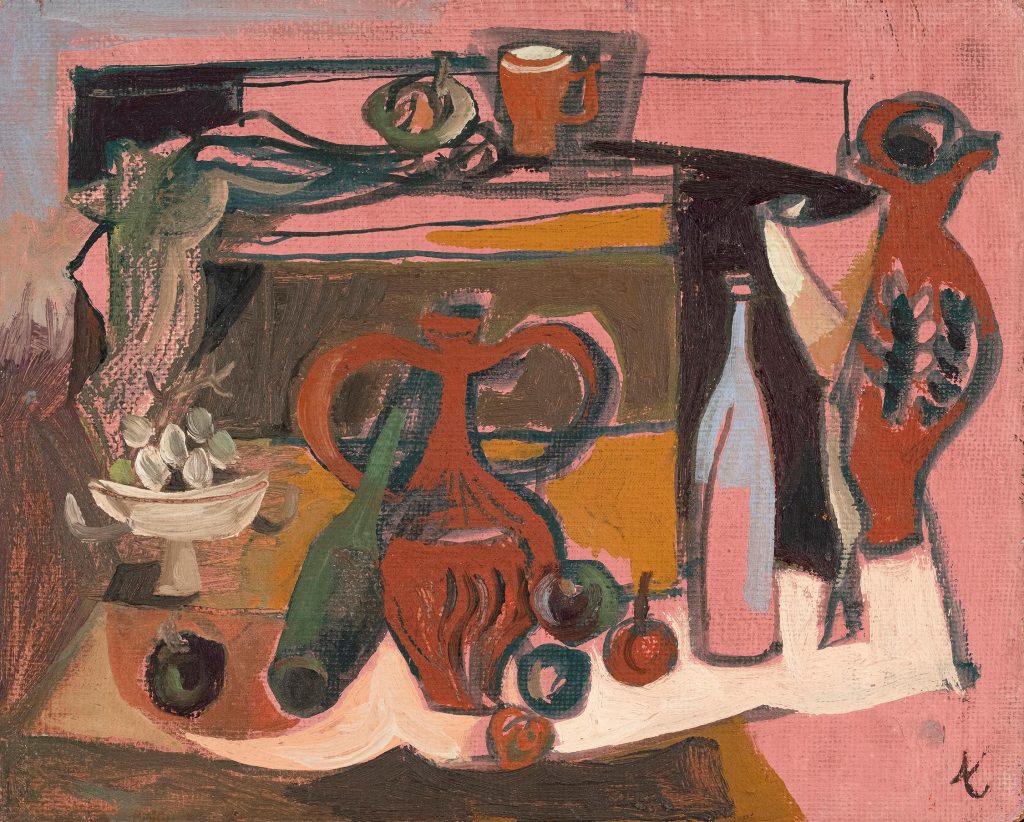
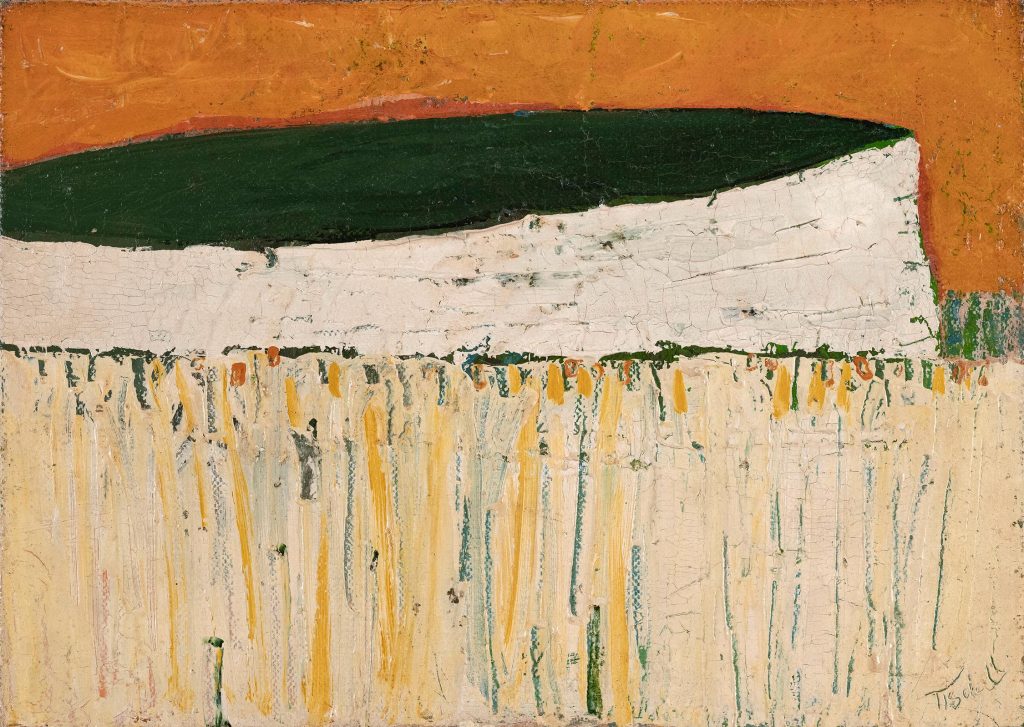
This exhibition is entirely drawn from works in the artist’s estate. All were made during the first half of Tisdall’s career, from the 1930s and 1960s. Throughout his life Tisdall remained distinctly European in his outlook and sensibilities. As these works show, he cannot be easily defined by nationality or by a single medium, but instead by the breadth and versatility of his work.
Below is a selection of works that will be included in the exhibition